🔐 Could AI break Bitcoin? K33 says the Claude-assisted Riemann proof poses no threat to its cryptography yet
In brief
- 🔐 Research firm K33 says in a Friday report that there is no evidence Bitcoin's security has been broken.
- 🧮 The trigger is the Claude-assisted draft proof of the Riemann hypothesis, which revived fears about the math behind cryptocurrencies.
- 🔑 K33: the proof offers no way to derive a private key from a public one, and P versus NP remains unsolved.
- 🛡️ The analysts' verdict: vigilance without panic.
🔐 Crypto research and brokerage firm K33 considers Bitcoin safe despite AI's recent successes in mathematics. In a report published Friday and covered by the crypto outlet Decrypt, the analysts write that AI's rapid progress in math warrants closer attention to the network's defences, but that there is no evidence its security has actually been broken. 🧮 The debate was sparked by a draft proof of the Riemann hypothesis that Anthropic mathematician Levent Alpöge presented with help from the company's Claude model. The proof has passed independent computational verification, while academic review is still ongoing. Since then, people have speculated whether AI could one day also unravel the math that secures digital assets. K33 pushes back on the alarm: Bitcoin's signatures rely on elliptic curves, and the Riemann proof provides no method for attacking them. The analysts advise watching the field and hardening cryptography over time, without panic. 🛡️
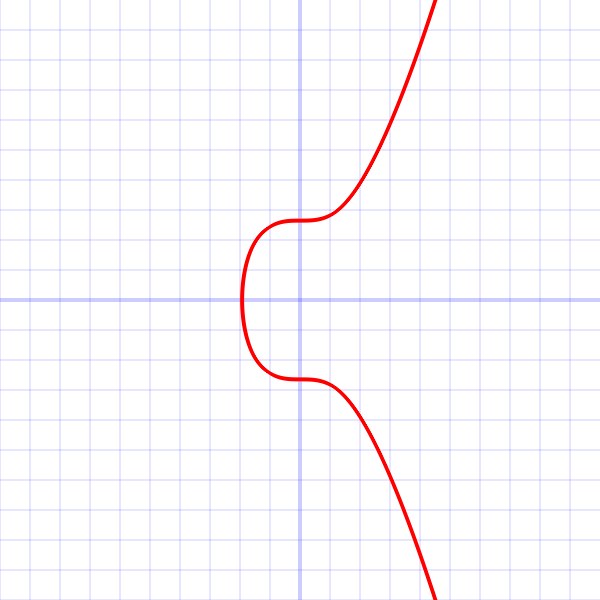
🔑 **What Bitcoin rests on.** Every Bitcoin transaction is signed with a digital signature based on elliptic curves; Bitcoin uses the curve secp256k1. Security depends on an asymmetry: computing the public key from a private key is easy, while the reverse is considered practically impossible. That reverse direction is exactly what an attacker would need to spend someone else's coins. According to K33, the Riemann proof offers no approach to it at all: it concerns the distribution of the zeros of the zeta function, and thus of the primes, not the computational problem the signatures rest on.
🧩 **The real underlying question: P versus NP.** Behind the fears, K33 says, lies a deeper question of computer science: whether every problem whose solution can be checked quickly can also be solved quickly. That question is unsolved, and the analysts walk through both outcomes. Even a proof that P equals NP would not necessarily yield a usable algorithm, let alone one fast enough to recover a private key in any practical timeframe. Conversely, a proof that P does not equal NP would not guarantee Bitcoin's safety either, since faster attack algorithms could still emerge. Security hinges on concrete algorithms, not on a single grand theorem.
🌐 **The industry still takes it seriously.** K33 places its assessment in a broader debate. According to the analysts, the Ethereum Foundation recently flagged AI as a more urgent danger than quantum computing, because AI can find software flaws and sharpen existing algorithms. The foundation has doubled its protocol security team, K33 says, and recommended the Keccak-256 hash function for a post-quantum transition it aims to complete by 2029.
📈 **Why a brokerage weighs in.** The question is not only academic: the Riemann proof stoked speculation about whether AI could one day unravel the math securing digital assets. A research firm that advises investors is also answering whether markets should react to such headlines. K33's answer is restrained: the current state of affairs does not justify alarm.
🧮 **What the Riemann proof is and is not.** The Riemann hypothesis dates from 1859 and is one of the most famous open problems in mathematics. The draft proof by Alpöge and Claude is written in a formal language that machines can check; experts nonetheless expect long work before mathematicians fully understand it. For cryptography, K33 treats it mainly as a signal: AI is advancing quickly in mathematics, and that deserves monitoring.
🛡️ **The bottom line.** K33 sums up its position as vigilance without panic. AI's mathematical leaps should be monitored, and crypto networks are right to harden their cryptography against future threats. As things stand, however, Bitcoin's defences remain as sound as they were at launch, with no demonstrated compromise. K33 has not published the report openly; the assessment is given here as Decrypt quotes it.