🤖 Volvo trains humanoid robots in Ghent, aiming to put them into production from mid-2027
In brief
- 🏭 Volvo Cars is training Hexagon Robotics' AEON humanoids at its plant in Ghent, Belgium, the first Volvo factory to try them.
- 🧑🏫 The robots learn by imitation: staff demonstrate tasks and the machines copy them.
- 📅 A pilot with more units follows in the first half of 2027; production use is planned from mid-2027.
- 💪 Volvo's aim: the robots should take over physically demanding work.
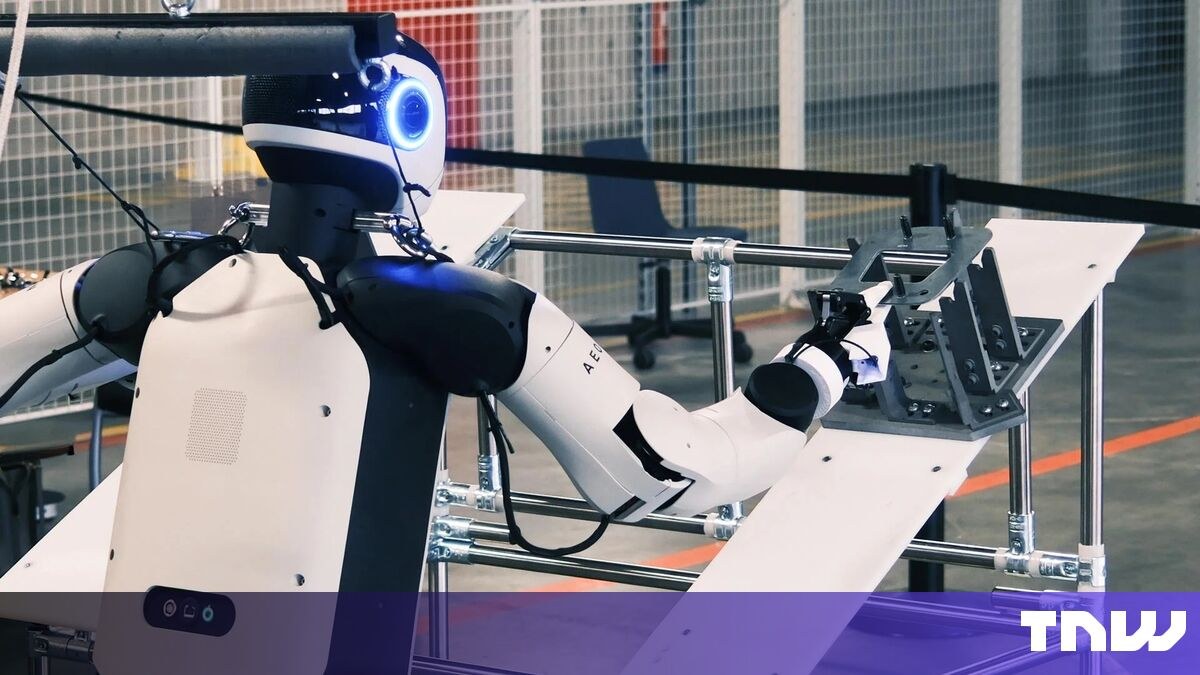
🤖 Volvo Cars has started training humanoid robots for factory work at its plant in Ghent, Belgium. It is the Swedish carmaker's first plant to try such robots, the company said on 26 November. The machines are called AEON and come from Hexagon Robotics, the robotics division of the Swedish technology group Hexagon. 🧑🏫 Engineers from Volvo and Hexagon are training the robots on the factory floor by imitation: a person demonstrates a task and the robot copies it. The current phase prepares a pilot project in the first half of 2027, for which more units will come to Ghent. From mid-2027 the robots are meant to work in regular production. Volvo wants them to relieve staff of some of the most physically demanding tasks.
⚙️ **What the robots are practising.** The first task is narrow: placing parts into two fixtures with high precision. Every step is checked before the next level of difficulty. After that the robots are to handle several parts at once, move around the plant and work with the automation already running there.
📏 **The machine.** According to the companies, AEON is 1.65 metres tall and weighs 60 kilograms. Unlike many humanoid robots it has no legs but moves on wheels, at up to 2.4 metres per second, about 8.6 kilometres per hour. It carries up to 10 kilograms. Cameras and sensors map its surroundings and recognise the parts it has to pick up. Hexagon designed AEON as a multi-purpose platform that can be retrained for different jobs.
🏗️ **Why a human shape.** Classic robot arms are unbeatable when the same movement is repeated thousands of times in one fixed spot. When a task needs mobility or adaptation, they reach their limits. 'AEON's humanoid design means it can fit into our production as it is today, alongside our teams and existing automation,' says Magnus Nilsson, chief manufacturing officer at Volvo Cars. The plant does not have to be rebuilt for the robots. The aim is for them to take over some of the most physically demanding tasks and make work more ergonomic. Arnaud Robert, president of Hexagon Robotics, describes the maker's goal as humanoid robotics that delivers real help along the whole factory flow.
🌍 **Not an isolated case.** Several European factories are running similar trials. BMW is piloting the same robot at its Leipzig plant this year. At Siemens in Erlangen, a humanoid completed an eight-hour shift in April, the tech site The Next Web reports. Hyundai, owner of Boston Dynamics, plans to mass-produce the Atlas humanoid from 2028.
❓ **What is still open.** Volvo has not said how many robots the pilot will use, which models they will work on or which workstations they will relieve. There is no information on costs either. Whether the timetable holds depends on how well the training on the factory floor goes in the coming months.
Sources
- Volvo porta i robot umanoidi in fabbrica: ecco AEON, pronto ad affiancare gli operai (Hardware Upgrade)
- Volvo addestra i robot AEON copiando gli operai: in fabbrica dal 2027 (HDmotori.it)
- Volvo starts training humanoid robots for its Belgian car factory (The Next Web)
- Volvo Cars trains Hexagon Robotics' humanoids for manufacturing