⚗️ Hugging Face CEO Delangue: distillation is a brake on concentrated AI power
In brief
- 🗣️ Clément Delangue, CEO of Hugging Face, calls distillation “good and healthy” for the AI industry.
- ⚖️ His thesis: it is one of the few things limiting extreme concentration of power, capabilities and wealth.
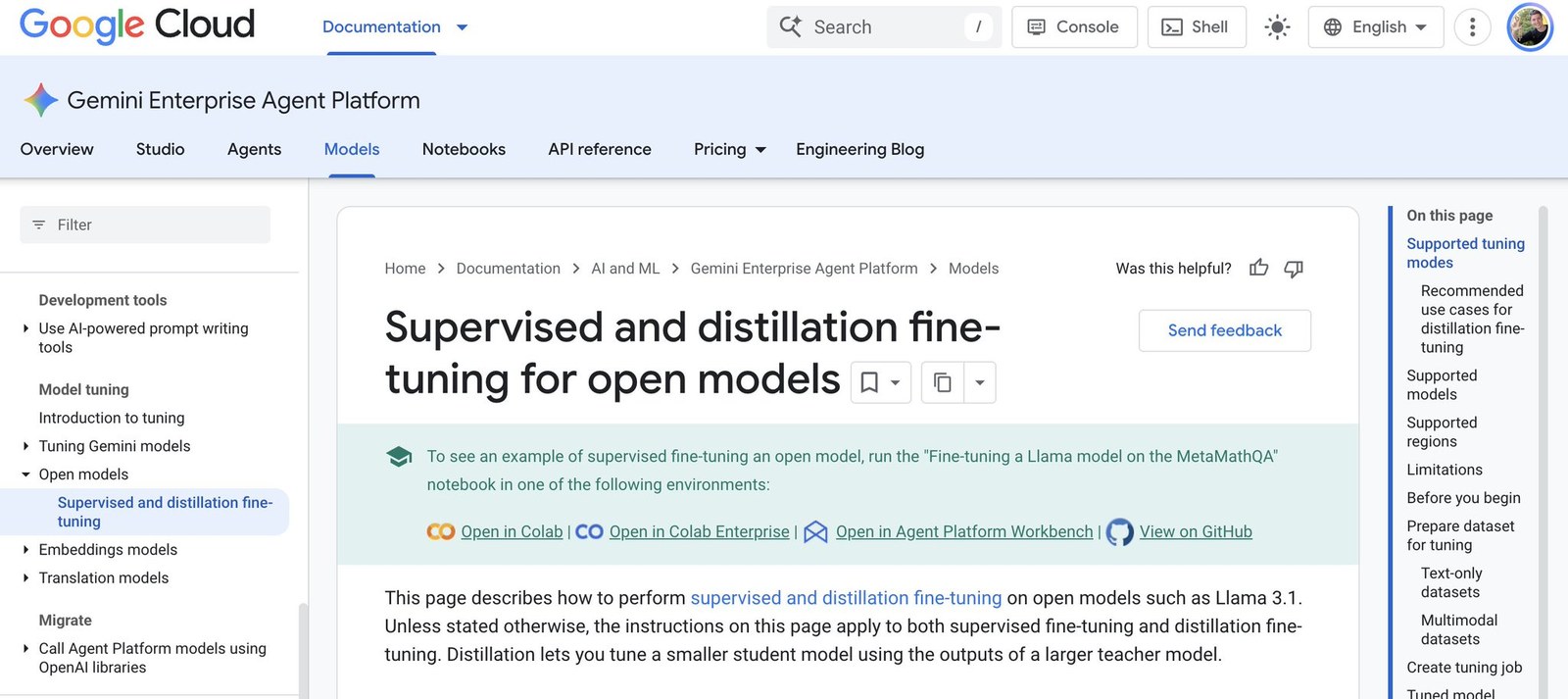
- ☁️ Trigger: Google Cloud documents distillation as a service for business customers, with open models as teachers.
- 🛡️ At the same time Anthropic, OpenAI and Google are building defences against unauthorised copying of their models.
⚗️ Clément Delangue, co-founder and CEO of the open-model platform [Hugging Face](https://huggingface.co), came out firmly in favour of distillation in a [short post on X](https://x.com/ClementDelangue/status/2126322165364719677) on 27 November 2026. In distillation a smaller “student” model learns from the answers of a stronger “teacher” model. Delangue calls it “good and healthy”: one of the few things limiting an extreme concentration of power, capabilities and wealth. And he adds a pointed comparison: AI companies themselves became successful by “distilling the web”, that is, by learning from other people's text. ☁️ The trigger is Google. Delangue says it is great to see the company promoting distillation. Google Cloud's documentation describes how business customers can train a small open model on the answers of a larger one. The timing matters: the big labs are currently fighting hard against unauthorised distillation, above all by Chinese rivals. Delangue's post is an opinion, not a finding of fact; as head of the main platform for open models he has his own stake in knowledge flowing from big models into small, freely available ones.
🔍 **What Google actually offers.** Google Cloud's documentation for its Gemini Enterprise Agent Platform describes “distillation fine-tuning” for open models: the customer names a teacher model, it generates responses, and those train a smaller student. In the code example the teacher is Z.ai's GLM-5.2 and the student a Qwen 3 model. Customers pay for training tokens plus the teacher's API calls, and according to Google the finished model can be exported and run elsewhere. According to an analysis by the Chinese outlet InfoQ, republished by 36Kr, there was also a separate Gemini Distillation Service that let selected customers distill Gemini 3.1 Pro into Gemini 2.5 Flash: by invitation only, for experiments and not for production, in early access since May 2026. Its English page now returns an error. Whether Google has just launched anything new is therefore unclear; the debate was set off by a widely shared Chinese-language post.
🛡️ **The headwind.** The same companies that sell distillation fight it when it happens without permission. In February Anthropic accused DeepSeek, Moonshot and MiniMax of generating more than 16 million exchanges with Claude through about 24,000 fraudulent accounts to copy the model; in October it said new safeguards had cut the harvested data by roughly 90 to 99 percent. According to InfoQ, Google too describes cross-account detection and active defences meant to reduce the value of stolen Gemini outputs for a student model. Reuters reported the effect on 26 November: Moonshot is now turning to Google and Meta models, and Z.ai's next large model, GLM-5.5, is delayed, according to one source partly because of the tougher safeguards.
⚖️ **Delangue's argument in context.** In his post Delangue does not separate permitted from unauthorised distillation; he judges the technique as a whole. His idea: if the abilities of the best models cannot trickle down into smaller, cheaper and open models, they stay with a few companies, which then set prices and access. The “distilled web” comparison points at the big labs having trained their own models on text that belongs to others while now wanting to forbid the same principle when it is applied to them. Whether that holds is disputed: the labs see mass harvesting through fake accounts as a breach of their terms of service and a security risk, not as a form of competition.
💡 **A different view from investors.** On the same day Martin Casado, a general partner at the investor a16z, argued almost the opposite, as Dealroom reports: a leading lab should even encourage distillation, because it forces rivals to pay for second place and stay tied to it. In his experience the leader keeps well over 80 percent of the market by revenue. Replies objected that Google does not offer its frontier Gemini models as teachers in the open service, and that Anthropic has let customers distill Claude 3.5 Sonnet into Claude 3 Haiku through Amazon Bedrock since December 2024. Distillation is already a business, as long as it happens on the lab's own platform and is paid for.
📌 **What remains open.** Delangue's post is three sentences and a picture; he backs his thesis with no figures. For readers it is above all a clear signal of where the front line runs: on one side open models and platforms like Hugging Face, which live from the transfer of knowledge; on the other the frontier labs, which guard their models as capital. Between them stands Google, selling distillation and arming against it at the same time.
Sources
- Google's official guide to distilling Gemini (36Kr (InfoQ))
- Martin Casado: encouraging distillation may be the winning strategy (Dealroom News)
- Supervised and distillation fine-tuning for open models (Google Cloud)
- Moonshot reportedly turns to Google and Meta models for distillation (The Next Web)
- Clément Delangue: post on distillation (X (Clément Delangue))