🤖 TÜV study: More than 80% of Germans use generative AI, one in three daily
In brief
- 🤖 A Forsa survey for the TÜV association finds more than 80% use generative AI, up from 65% a year ago.
- One in three uses AI at least once a day; 44% of 30- to 49-year-olds, and use grows fastest from age 65.
- ChatGPT's share falls from 85% to 76%; 85% worry about privacy and 95% want mandatory reporting of serious AI incidents.
🤖 Four years after ChatGPT's launch, more than 80% of respondents in Germany use generative AI, up from 65% a year ago and 53% two years ago. That is the finding of the TÜV AI study, which the TÜV association presented on Tuesday. Forsa surveyed 1,009 people aged 16 and over. One in three uses AI at least once a day, and use is growing fastest among people aged 65 and over. Most see AI as a tool, mainly for searching for information. At the same time 85% voice privacy concerns, and a large majority wants more effort on AI safety at German and European level.
Who uses it, and how much: the power users are the 30- to 49-year-olds, 44% of whom use AI daily. Despite growing use, 79% say it would be fairly or very easy for them to do without AI. 90% see AI as a tool that helps them do tasks faster or better. A large part of that is searching for information, what people used to google; another popular field is analysing photos and documents. About 10% of users treat language models as a conversation partner. Respondents seek personal advice on finances, contact details and official documents. Private use outweighs work use: 38% use AI only privately, 37% both in everyday life and at work.
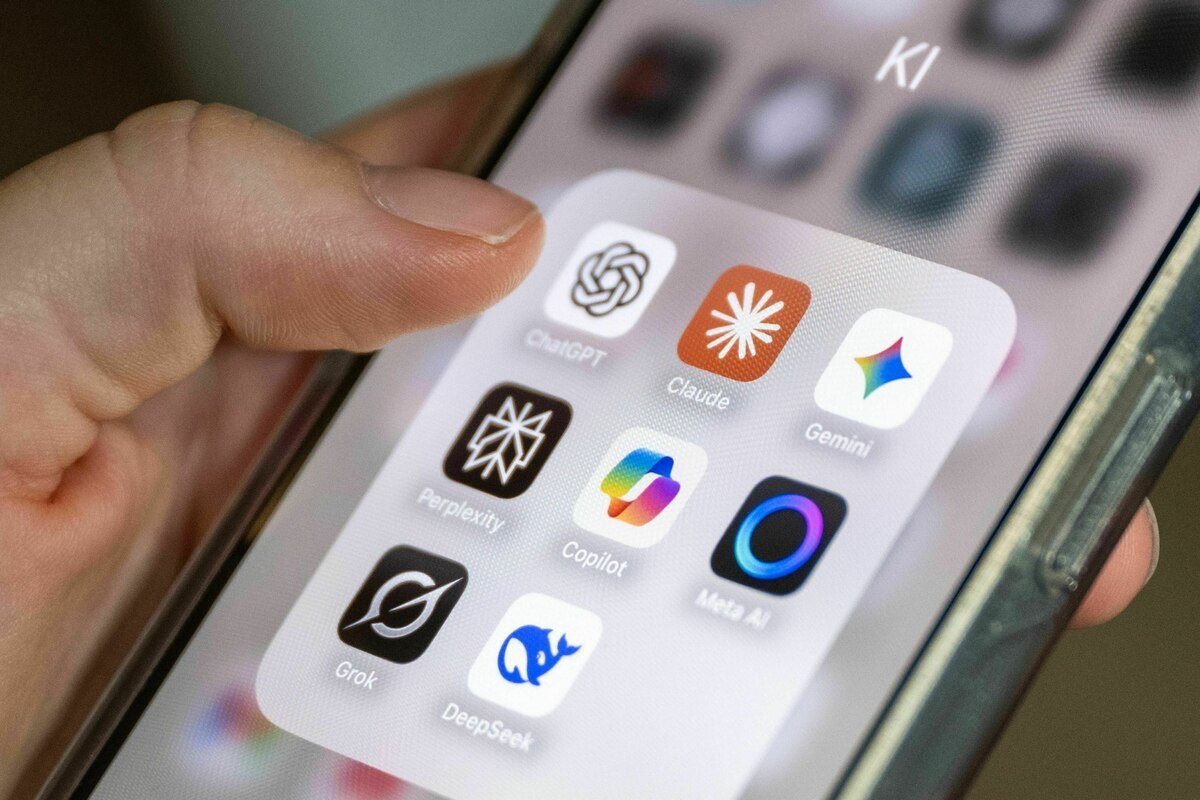
The market is shifting. ChatGPT remains the leader, but its share of use fell from 85% to 76%. The taz attributes this to growing competition: Google's Gemini and Anthropic's Claude are becoming more popular in Germany. The way people use AI is changing too: the share of dialogues with an AI voice rose from 3% in 2025 to 20%, and in 2026 more people use AI on a smartphone than on a PC or laptop. Joachim Bühler, managing director of the TÜV association, sees that as a sign that AI is moving into everyday life.
Caution and carelessness sit side by side. One in three users shares personal information, most often about work, training and studies, then health, then intimate matters and relationships. About 12% have given AI tools access to their calendar or email. One in seven does not check AI answers, and among people over 65 it is one in five. Nine in ten respondents find security risks hard to assess and expect more cyberattacks because of AI; almost as many fear AI companies have too much influence on the economy and society. 81% worry that AI, especially AI agents, could escape human control, as in the Hugging Face hack in the summer.
The study draws political wishes from this: 83% want China and the US included in international safety agreements, 95% consider mandatory reporting of serious AI incidents right and important, and 55% trust independent testing organisations to monitor AI safety. The TÜV AI.Lab proposes expanding the German AI Safety Institute (Aisi) into a centre of expertise for assessing the safety of powerful models, especially so-called frontier models. Bühler calls for joining AI competence with safety competence, including expertise from fields such as hospital infrastructure.