📚 Sber's GigaChat writes the second volume of Gogol's 'Dead Souls' that he burned – readers divided
In brief
- 📖 Sber's language model GigaChat has produced its own version of the second volume of Gogol's Dead Souls, which the author burned in 1852.
- 🧪 Historians, literary scholars, linguists and engineers worked on it for over a year; Sber itself says the text is 'not Gogol'.
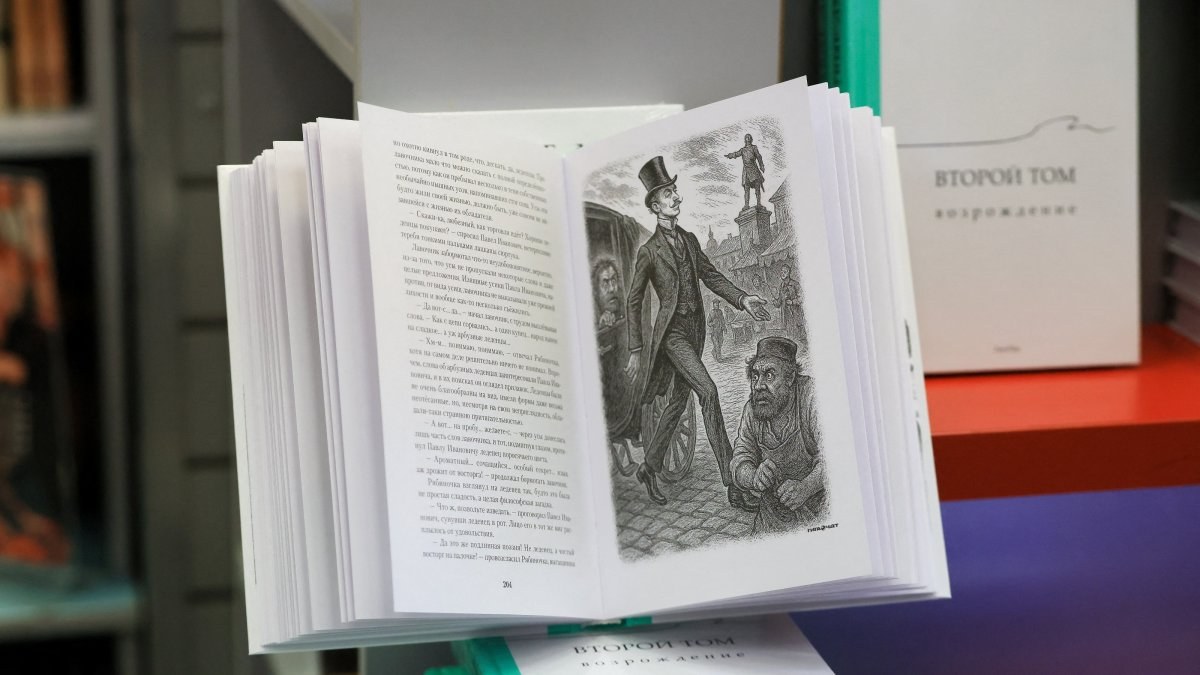
- 🛒 The book 'Dead Souls: Revival' has been on sale in Russia since October, with 21 AI illustrations.
- 🗣️ According to Reuters some readers praise the tone, while Gogol experts doubt its artistic value.
📚 Russian banking and technology group Sber has used its language model GigaChat to generate a second volume of Nikolai Gogol's novel Dead Souls. Gogol threw the manuscript into the fire in February 1852, days before his death; only the first volume and a few incomplete chapters survived. The book 'Dead Souls. Volume Two. Revival' has been in Russian bookshops since early October and was presented in Moscow at the end of the month. According to Sber, a team of historians, literary scholars, linguists and engineers worked on the project for more than a year. The company itself stresses that the result is 'definitely not Gogol' but a new text built on the principles of his narrative style. 🖋️ A month after the launch, Reuters gathered reactions: project lead Vladislav Otroshenko calls it a bestseller and an unprecedented experiment, and visitors to the launch praised how close it feels to the original. Gogol experts and other readers object that nobody can compute what an author would have written next.
📜 **A riddle of literary history.** Gogol planned Dead Souls as a work in three parts. In the first volume, published in 1842, the swindler Chichikov travels the provinces buying up dead serfs who are still listed in the landowners' tax rolls. In the later volumes he was meant to undergo a moral rebirth. Tormented by artistic and religious doubts, Gogol could not make it work and burned most of the second volume on the night of 24 February 1852. One draft is kept today in the Russian State Library in Moscow.
🧠 **How the model was trained.** According to Sber, GigaChat was trained on Gogol's complete works including his letters, drafts and notebooks, plus texts by contemporaries such as Pushkin, Dostoevsky and Turgenev, philosophical and biblical writings and even paintings Gogol admired. To judge the output the team built an eleven-point system covering vocabulary with archaisms and Gogol-style coinages, long rhetorical periods, the grotesque, the physical comedy of the dialogue and the active presence of the narrator. Experts checked every generated episode to make sure it told something new rather than copying Gogol's passages. Otroshenko told Reuters the machine needed about four months to develop a plausible literary style and handled the plot and the artistic side 'very well'.
🎨 **Pictures in the style of the first illustrator.** The book includes 21 illustrations that GigaChat generated in the style of Alexander Agin, who illustrated the first volume during Gogol's lifetime. It is sold through the bookshop chains Chitai-Gorod and Bookvoed. Sber marketing chief Vladislav Kreynin names two goals: to show that neural networks can be tools of analysis and synthesis in the hands of professionals, and to bring young readers back to the Russian classics. The company places the project alongside earlier AI efforts such as deciphering Peter the Great's handwriting and a version of Tchaikovsky's unfinished opera Mandragora.
🗣️ **The criticism.** A visitor to the Gogol Museum in Moscow told Reuters that AI could not capture what was lost, that the book would not move her and that she did not even want to read it. Gogol expert Artyom Nikitin questions the principle: by the same logic AI could write sequels to any number of works. But a literary work does not automatically follow from everything an author created before, he said; even knowing the language, style and plot lines does not tell us what the author would write next.
🌍 **A contested classic.** Gogol was born in what is now Ukraine, then part of the Russian Empire, and wrote his major works in Russian; both countries claim him. That a Russian state-controlled group has regenerated his lost volume with AI is therefore also a cultural statement, even though Sber presents the project as research and education. How good the text really is can so far only be judged from reader voices: no independent scholarly review was available when this article was published.