💡 Why a darker room can look almost as bright to a robot
In brief
- 🧪 Four grasping models succeeded in 20 of 40 normal-light trials and 19 of 40 low-light trials.
- 📷 The cameras compensated for much of the change in room lighting.
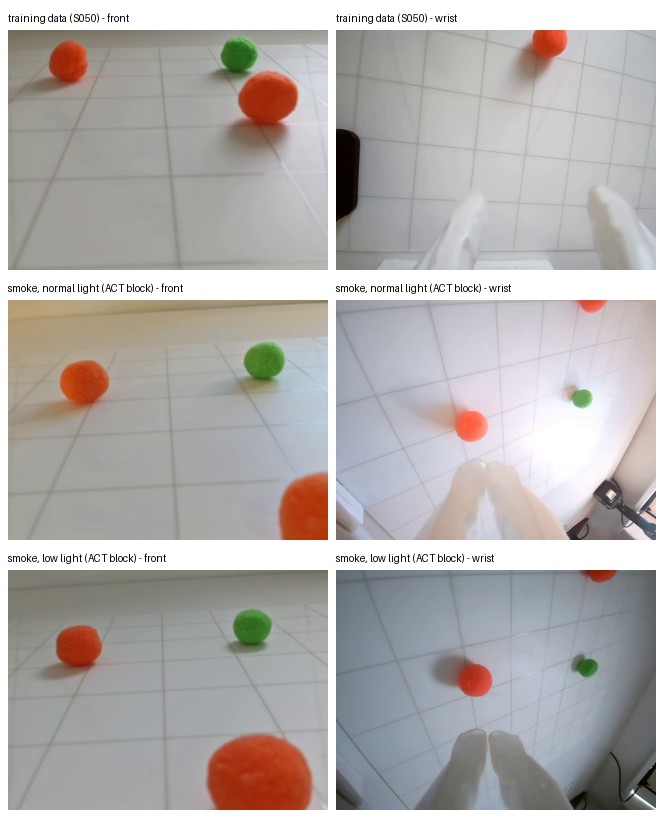
🔦 In a robot experiment, room lighting fell from about 520 to 45 lux. Success at moving an object barely changed. The front camera's images were only three percent darker on average.
🔬 All four models learned the same task from 50 demonstrations. The front and wrist cameras both used automatic exposure and white balance. The wrist camera's images got 19% darker on average. The authors recommend reporting camera settings and comparing the recorded images with training footage alongside room light measurements.