🤖 Singapore tests how AI and robots can run daily life across a whole district
In brief
- 🤖 In Punggol Digital District, robots respond to alerts from AI-powered cameras and sensors
- 📍 The 50-hectare area serves as a real-world test-bed, according to developer JTC
- ⚙️ A central platform helps run robots, lifts, air-conditioning and waste disposal
- 👀 A coffee clean-up described by AFP was a staged demonstration
- 📅 A formal opening headed by the prime minister follows next month
🤖 In Singapore's Punggol Digital District, companies are trying out AI and robots under real-world conditions. As the news agency AFP reports, cameras and sensors can spot spilled coffee, for example, after which a cleaning robot takes the lift and wipes it up without human help. This was shown in a staged demonstration. A central platform connects locations and robots and uses AI to analyse data from thousands of cameras and sensors, with human operators helping. 📍 The government-developed district covers 50 hectares, borders residential areas and is due to be formally inaugurated next month. Safety rules for the robots are still being drafted, according to industrial developer JTC.
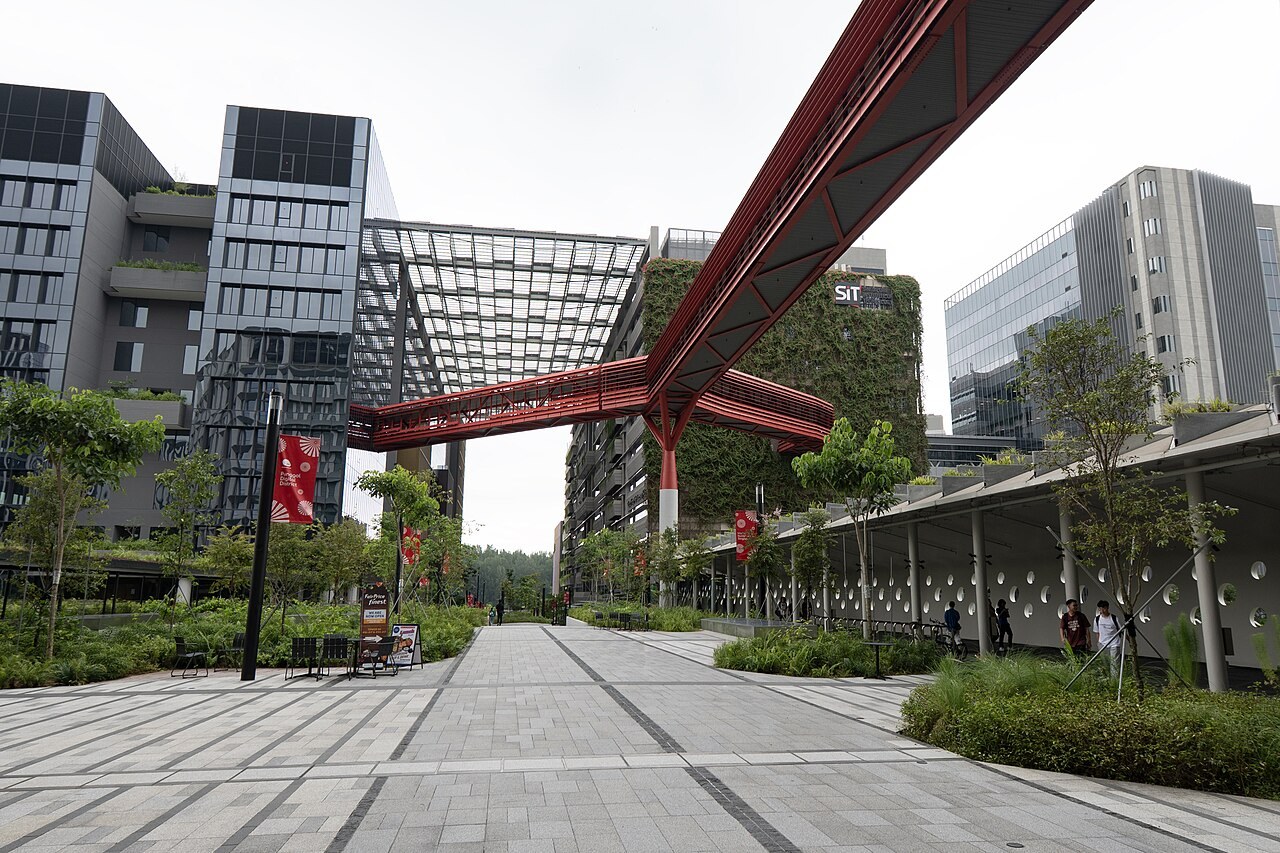
🏙️ The project's planner and developer is [JTC](https://www.jtc.gov.sg/punggoldigitaldistrict), Singapore's state industrial landlord. Tang Bing Wan, its chief digital and technology officer, told AFP that a district-wide test-bed of this kind is rare globally. Slightly larger than Vatican City, the area currently holds eight business and office blocks, a mall, a university campus and a metro station. Firms working in robotics, cybersecurity and financial services are based there, with more expected. To a visitor on foot, AFP notes, it does not look especially futuristic.
⚙️ **What runs behind the scenes.** The data ranges from air temperature to foot traffic. The system is meant to use it to respond to problems, anticipate disruption and cut energy use and waste. Three examples from the report:
- Lift movements can be reduced when demand is low.
- Restaurants can foresee busy hours and adjust staffing and food preparation.
- Centralised air-conditioning can be tuned in real time to use less power.
At the operations centre, a giant screen also shows a digital replica of the district that helps staff spot or predict anomalies. JTC calls the underlying system the Open Digital Platform and says it gives businesses and students access to real-time district data.
🧹 **Why robots.** Machines are meant to ease the ageing city-state's manpower shortage in areas such as cleaning and security, and a robot delivering food orders to offices is being trialled too. Ong Chen Hui of the Infocomm Media Development Authority said robotics offers a real part of the solution: taking over physically taxing routine work frees people for jobs that need human judgement, care and skill. James Tan, a director at government technology agency GovTech, said the district probably has Singapore's highest concentration of freely roaming robots because the estate was designed for that.
🔬 **Who is testing.** Local company [LionsBot](https://www.lionsbot.com/) makes fleets of cleaning machines for a future in which cleaners no longer hold a mop. Japan's Panasonic is testing a shared communications system for robots from different manufacturers. Takeshi Ando, who heads its innovation centre in the district, said similar trials in Japan took longer because he had to deal separately with a fragmented set of building managers, regulators and government agencies. Chua Kee Chaing, president of the Singapore Institute of Technology, said academics can work closely with companies on campus. In the surrounding neighbourhood, autonomous shuttles with a human safety operator already carry passengers on public roads.
🛡️ **Privacy and safety.** Despite rising global concern about AI risks, nobody AFP spoke to in the district raised worries about data privacy or surveillance. That reflects those conversations, not a representative survey. Tang said this was not a dystopian future. Amanda Lim, 34, a hospital worker living nearby, said her children chase and play with the robots; retiree Veronica Tan, 62, said it is up to humans to decide how advanced the technology gets. Companies use the district to test their technology before deploying it more widely.