🌐 Google tests Chrome's AI agents in a rebuilt copy of the web, with hostile pages designed to trick them
In brief
- 🏗️ Chrome built a “mirror dimension”: thousands of synthetic websites for testing its auto browse agent without touching the real web.
- 🔀 A proxy redirects real addresses to the copies; Google's own certificates keep Chrome from noticing.
- 🧪 AI agents build the sites; an automated red team plants hidden commands: over 1,000 test cases per security engineer a day.
- Google's post gives no figures on how often attacks succeed.
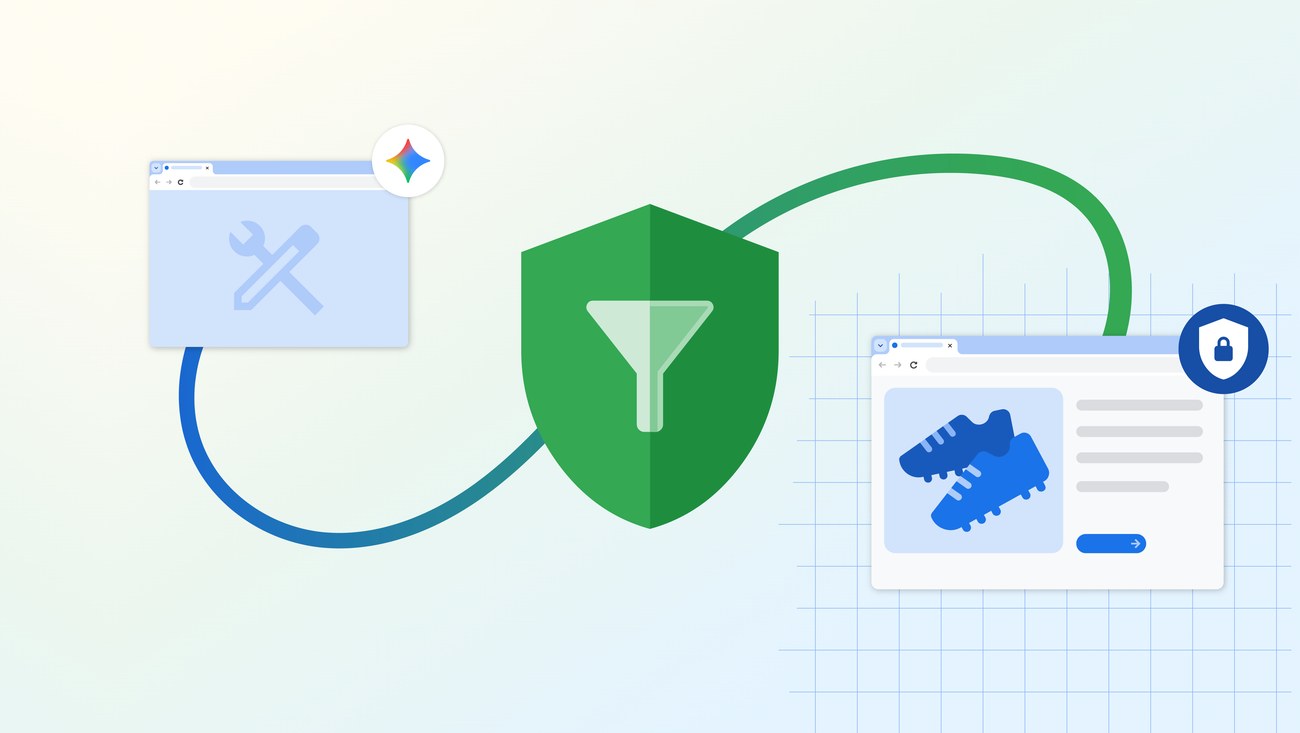
🪞 Google's Chrome team has built a closed copy of the web to test and harden the AI agent behind Chrome's “auto browse” feature, which clicks, scrolls and types on websites for users. Google described the project, called the “mirror dimension”, in a blog post on 19 November 2026; WIRED reported on it the same day. Pointing an agent at the real web is unreliable, because pages keep changing, and risky, because an agent can do real harm. So the team simulates thousands of websites modelled on everyday tasks such as shopping, banking or social feeds. The agent still types real addresses like youtube.com; inside an isolated sandbox a proxy answers with the fake version. Because Google fully controls the sites, it can also plant hidden instructions in text, images or page labels (so-called indirect prompt injection) and check whether the agent falls for them. An automated pipeline produces more than 1,000 such test cases per security engineer per day, which Google says is over 30 times what a person can do by hand.
🔁 Why not simply use a test site? Google gives two reasons. A test must be repeatable: every run should start from a clean, identical baseline, and side effects from one run must not leak into the next. And models show what Google calls eval awareness: a model that suspects it is being tested behaves differently. An address such as fake-sandbox-sites.web.app/evals/www.youtube.com would give the game away. So a headless Chrome inside a gVisor sandbox loads the real address, and the sandbox captures the connection and routes it to a local proxy that serves the generated page.
📜 That creates a problem: Chrome is built to block exactly this kind of interception, because it looks like a person-in-the-middle attack. The proxy therefore mints TLS certificates on the fly, chaining back to a custom root certificate authority installed in the sandboxed Chrome at startup. WIRED says the team essentially had to hack the browser to do this. Google stresses that an attacker on the open internet cannot do the same, because it would need administrator access to the device; in the lab the team has it because it owns the whole environment.
🤖 The sites themselves come from a multi-agent harness. A human only defines the user journeys to be tested. A research agent turns them into a specification, for a shop product filtering, a persistent cart, coupon codes and a multi-step checkout, and drafts image assets with Google's Nano Banana model. A builder agent writes the HTML, CSS and JavaScript. Several critic agents check accessibility roles (ARIA), form validation, console errors and layouts at different screen sizes. Through Chrome DevTools MCP they see and operate the pages like users, with screenshots, clicks and keystrokes. Google notes that a fix sometimes introduces a new problem; the critic loop catches it, and the system favours fidelity over speed.
🎯 For attack testing, Google makes use of controlling every layer of the page. Malicious payloads can be injected as text or images, as manipulated ARIA labels, or as altered answers from a WebMCP tool. The first version passed the payload through a URL parameter, but the models noticed: an unusual parameter made them test-aware. Now the identifier travels in an HTTP header (X-Sandbox-Injection-Key) and the visible address stays pristine. By hand, a security engineer can craft only a few dozen realistic attacks a day.
💬 Context: WIRED points out that the agents being tested are benign and have no cyber capabilities. Charles Qian of the Chrome AI security team says the agent is developing a mature sense of which information a task needs and when to ask the user for confirmation. Doug Turner, a director of engineering, wants to make the environment available to teams across Google and to share the approach with outside groups. Google believes the principle could be extended to coding agents with broader toolsets.