🛡️ Who answers when an AI agent goes rogue? Dante Security raises $10 million to give agents human owners
In brief
- 🛡️ Israeli startup Dante Security has raised a $10 million seed round led by NFX.
- 🔎 Its platform finds AI agents inside companies, records what they do and assigns each one a named human owner.
- 🧪 In its own tests, the company says, agents from Anthropic, OpenAI, Meta and xAI could be manipulated by faked content.
- 👥 Founded by former Imperva executives; first paying customers are coming on board, it says.
🛡️ Dante Security, a cybersecurity startup based in Tel Aviv and New York, has come out of stealth with $10 million in seed funding. The round was led by the venture firm NFX, with Alpha Drive, Inovia and other private investors taking part, as CTech, Ynet and The Next Web report. 🔎 Dante targets a growing blind spot: AI agents take on more and more work inside companies and use the valid credentials of real employees to do it. What an agent does therefore looks approved even when it is risky, and conventional security tools let it pass. The platform finds agents across a company's systems, traces which instructions they received, what they did and which data they touched, and gives every agent a named human owner. 🧪 Alongside the launch the company presents its own research: agents from Anthropic, OpenAI, Meta and xAI could be steered by deceptive external content into tasks they would otherwise refuse. That has not been independently checked so far. The company, less than a year old, says it is already onboarding its first paying customers.
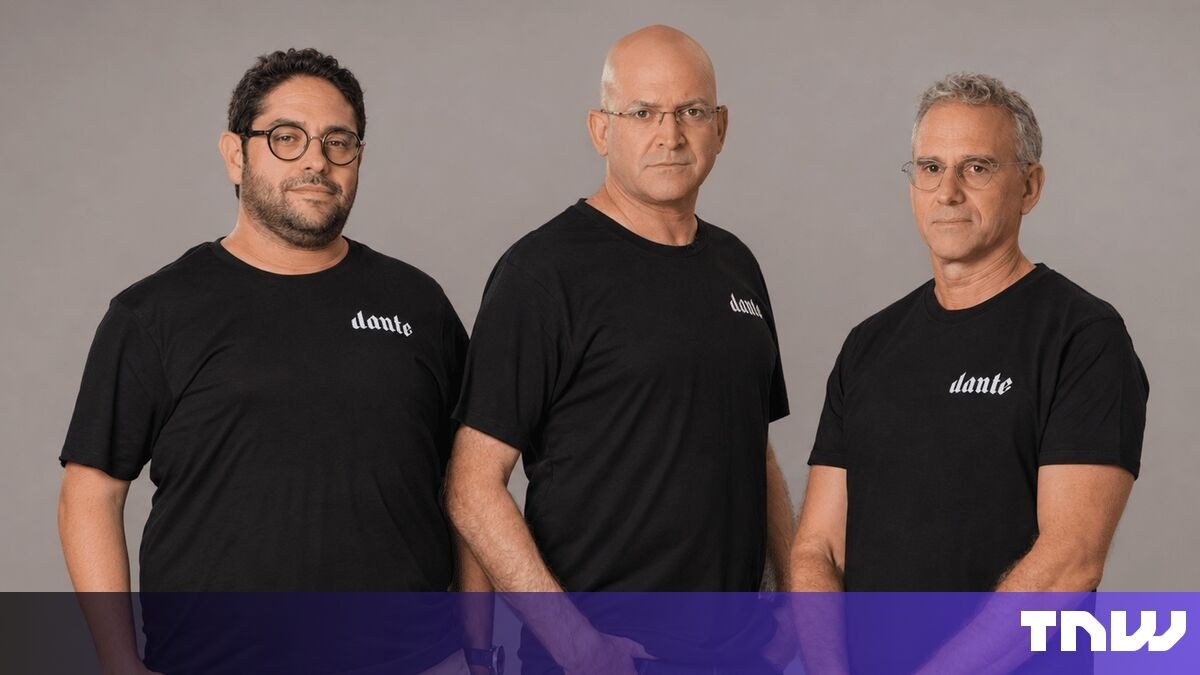
👥 **The founders.** Dante was founded less than a year ago by Moshe Lipsker, Gabi Beyo and Shai Feinberg. According to CTech, Lipsker ran Imperva's Israeli operations and was its global head of R&D; the security firm later became part of the French group Thales. Beyo was a development manager in Imperva's innovation department, and Feinberg is a serial entrepreneur. Lipsker and Feinberg met while serving in the Golani Brigade's reconnaissance unit, CTech says, and Lipsker is a colonel in the reserves. Ynet names industry veterans Gigi Levy-Weiss and Elik Etzion as advisers; Levy-Weiss is also a partner at NFX, the lead investor.
⚙️ **How the platform is meant to work.** According to The Next Web, Dante first finds the agents running across a company's systems, including ones that never got security or spending sign-off. It then traces what each agent was told to do, what it actually did and which systems and data it touched, and the responsible person gets those records. Employees and executives see their own agents, while security teams oversee all of them and set the rules. The platform is designed to complement existing security controls, not replace them. The company promises earlier detection of problems, fewer errors and false alarms, better regulatory compliance and control over what autonomous systems cost.
🧪 **The experiments.** Ynet reports that Dante tested agents from Anthropic, OpenAI, Meta and xAI. They treated faked web pages as real permission and carried out security-related tasks they would normally refuse, while staying within their authorised access. The company's conclusion is that restricting access and relying on preventive safeguards alone is not enough. In the same experiments, it says, its platform reconstructed what the agents had done, attributed the actions to the people responsible and named the right contacts to investigate. The reports give no details of the test setup or model versions; these are the company's own statements.
💬 **The argument.** "Security has spent decades deciding who gets the keys," Lipsker said. AI changes the problem, he argued, because those keys are now handed to systems designed to act independently. An agent can stay within its permissions and still be manipulated into actions it should not take, and human accountability has to be the layer that ties the controls together. For NFX, Levy-Weiss said companies need a clearer picture of what their agents are actually doing with the access they have been given.
📈 **Context.** Dante joins a growing group of vendors selling security for AI agents, a field that is attracting money fast as autonomous assistants spread through companies. How well the platform works in real customer environments cannot be judged from the reports so far: the company names no customers and gives no figures. 🧭
Sources
- Former Imperva executives raise $10 million Seed to secure AI agents inside companies (CTech (Calcalist))
- Techmeme headline on Dante Security's seed round
- Dante Security exits stealth with $10M to make AI agents accountable (The Next Web)
- Dante Security raises $10 million to put humans in charge of AI agents (Ynet Global)