🧾 A tax on AI tokens: Gates, Amodei and Germany's digital minister back it, but it is not coming soon
In brief
- 🧾 Bill Gates, Anthropic CEO Dario Amodei and German digital minister Karsten Wildberger want AI usage taxed to cushion job losses.
- 💶 A token tax would sit on the units AI firms bill by; Amodei floated about 3 % of revenue.
- 🏛️ A US House bill proposes 2 to 3 %, rising with unemployment.
- 🌍 Loopholes, tax competition and Trump's tariff threat stand in the way, n-tv argues.
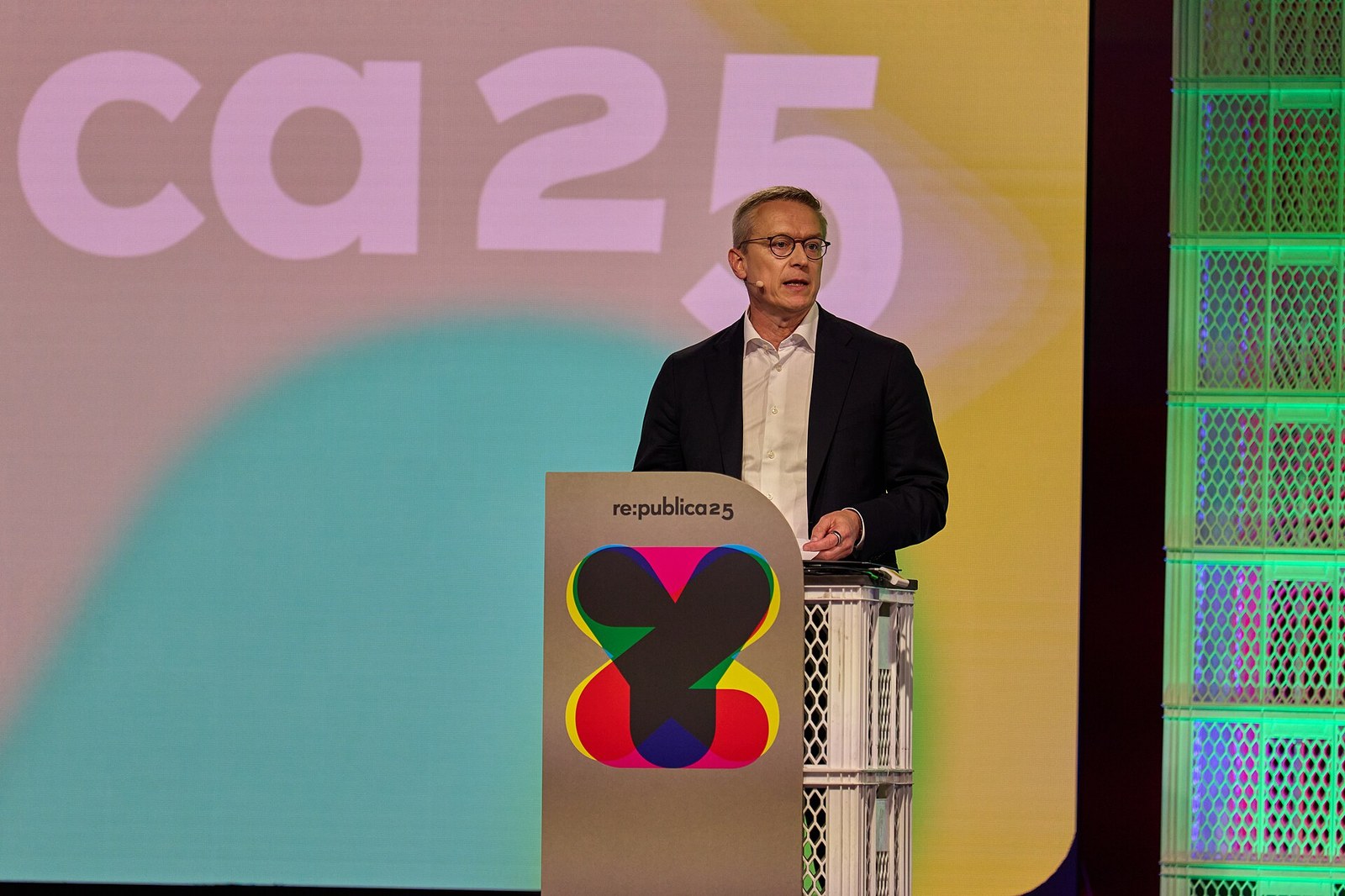
Taxing machines that replace people has moved into the centre of the debate. Bill Gates, who was mocked for proposing a robot tax in 2017, wrote in August that „we should tax AI tokens and robots“. Anthropic CEO Dario Amodei has, according to US reports, suggested a levy of about 3 percent on revenue from model usage, and Germany's federal digital minister Karsten Wildberger called in October for taxing the „extremely high revenue“ from AI. 🧾 The so-called token tax would be charged on tokens, the small units of text that Anthropic, OpenAI and others already use to bill their customers. It is meant to make AI use more expensive and to correct a tax imbalance: a company pays wage taxes and social contributions for an employee but nothing for an AI agent. The money would pay for retraining and social security. An analysis by the German broadcaster n-tv (28 November) concludes that the tax is unlikely to arrive soon: no country wants to introduce it first and lose out in the competition for investment, and US President Donald Trump threatens countries with digital taxes with retaliatory tariffs. 🌍
💶 How the levy would work. Either every token would carry a fixed amount, or token revenue would carry a percentage surcharge. Unlike VAT, businesses could not reclaim it as input tax, so it would be a real extra cost rather than a pass-through item. Collecting it would be technically simple, n-tv writes: subscriptions to Claude and ChatGPT already carry German VAT, which the providers pay over themselves for private customers while business customers account for it under the reverse-charge procedure.
🏛️ The bill in Washington. The idea has gone furthest in the United States, though only as a proposal. Democratic Representatives Greg Casar, Valerie Foushee and Sara Jacobs introduced the AI Tax and Work Protection Act (H.R. 10044) in August. It would tax large AI companies either on the value of the tokens they process or on their AI service revenue, whichever yields more. With unemployment at 5 percent or less the rates would be 2 and 3 percent, rising as joblessness climbs; the money would fund job programmes in housing construction, infrastructure and care work. Nothing has passed, and a veto by President Trump is widely expected. According to Fortune, DuckDuckGo founder Gabriel Weinberg said his company would be willing to pay a 10 percent tax on its token usage.
🎓 What researchers say. A position paper by Oxford researchers including Fazl Barez argues that token taxes are a suitable tool against AI's economic risks, such as eroding tax bases. Their advantage: they can be enforced through existing compute-governance infrastructure and capture value where AI is used rather than where models are hosted. The authors also list open questions: the cost could be passed on to customers, the tax could stifle innovation, and AI superpowers could use their economic and diplomatic power to block it. A tax on computing operations (FLOP) might be the better choice, they write.
🕳️ The loopholes. Millions of free users would trigger nothing. Companies could route their AI purchases through foreign subsidiaries, and tax offices could hardly verify the reported token sales independently. The bigger obstacle is political, n-tv argues: whoever introduces the tax first makes AI more expensive at home. Trump has threatened countries that levy digital taxes with 100 percent tariffs on their exports, and a token tax would be a form of digital tax.
🇩🇪 Where Berlin stands. Besides Wildberger, family minister Karin Prien (CDU) has spoken out for taxing AI, and the SPD, the Greens and the Left are seen as open to it. Economy minister Katherina Reiche rejects it, and Chancellor Friedrich Merz wants to give priority to building up AI.
🤔 Why tech bosses support it. n-tv notes that the demand costs people like Amodei little as long as no coalition of countries moves first. A token tax is also the lesser evil for AI firms: a tax on their profits would be harder to pass on to customers. Amodei himself conceded that the levy is not in his economic interest but called it a reasonable solution.