🧑🏫 Hong Kong launches AI platform to train teachers to spot students' mental health problems
In brief
- 🧑🏫 Three Hong Kong universities and a professional association have launched the MentAI Bot learning platform.
- 📅 The first phase is designed for 300 university students and 300 teachers from 20 schools.
- 💬 The team says it combines natural-language interaction with personalised feedback.
- 🛡️ Teachers are meant to recognise problems and refer cases on, not diagnose.
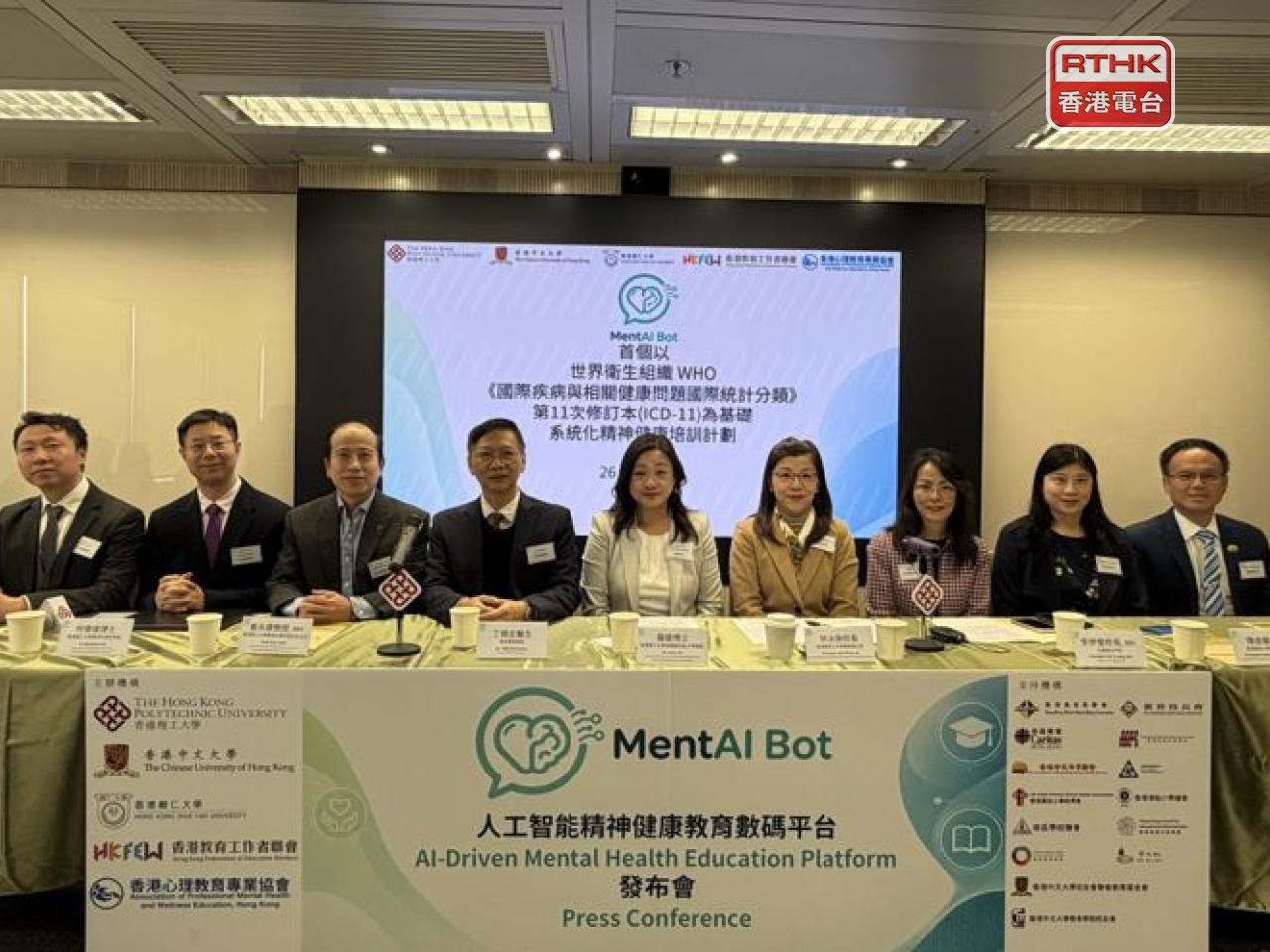
🧑🏫 Researchers from Hong Kong's Polytechnic University, Chinese University and Shue Yan University have launched MentAI Bot, a digital learning platform, together with a mental health and wellness education association. It is meant to help teachers and trainee teachers recognise students' mental health needs earlier and respond appropriately. 📅 The first phase, which began on November 26, is aimed at 300 university students and 300 teachers from 20 schools. It opens with modules on mental health literacy and depression, with anxiety and bipolar disorder to follow. 💬 According to the team, the platform combines natural-language interaction and personalised feedback with video case studies and game-like exercises. It is not meant to turn teachers into therapists: the AI is described as a partner for reflection, not a replacement for professionals.
📚 **The clinical basis.** The content builds on the eleventh revision of the World Health Organization's International Classification of Diseases (ICD-11). Its makers call it Hong Kong's first systematic training programme of this kind based on that framework, translating a diagnostic scheme into learning material for people without psychological or medical training. For teaching design, the team uses the SOLO taxonomy by Biggs and Collis, which describes levels of understanding, according to the [Hong Kong Commercial Daily](https://www.hkcd.com/hkcdweb/content/2026/11/26/content_8787481.html).
📈 **Why a digital format.** At the launch, speakers said conventional training reaches only 200 to 300 teachers a year because places are limited, while Hong Kong has more than 50,000 of them. One speaker also cited a survey by the Advisory Committee on Mental Health: about one in seven young people experiences emotional distress, and only around 40 percent of those affected aged 17 and above seek help. While the city's overall suicide rate has fallen, youth cases have been rising, the report said.
🤝 **What the AI is for.** A Polytechnic University professor of applied social sciences described the system as a reflective learning partner that should replace neither teachers nor therapists. The reports read for this article do not say which language model sits behind it or how participants' input is protected.
"Our mission is to empower teachers to understand mental health issues in a very fundamental manner with international recognised standards," association chairwoman Amy Lam said, according to [RTHK](https://news.rthk.hk/rthk/en/component/k2/1879346-20261126.htm). After the four sections, teachers should feel more confident with students facing such challenges. The developers also hope to chip away at the stigma around mental health in schools.
🏫 **Who takes part.** Secondary, primary and special schools are involved. The Commercial Daily also lists international and direct-subsidy schools, as well as schools for Hong Kong children in the Greater Bay Area.
🗓️ **What comes next.** Six focus groups with teachers and a second set of material on anxiety and bipolar disorder are planned for January and February 2027. In March and April, the team intends to analyse questionnaires and tests taken before and after training and refine the content. A research report is due to be presented on April 24, 2027. There are no results on effectiveness yet.