🛒 AI shopping agents remain a sideshow on US Black Friday
In brief
- 🛒 According to Bain & Company, only 0.4% of online purchases worldwide go through AI agents, 0.2% by value.
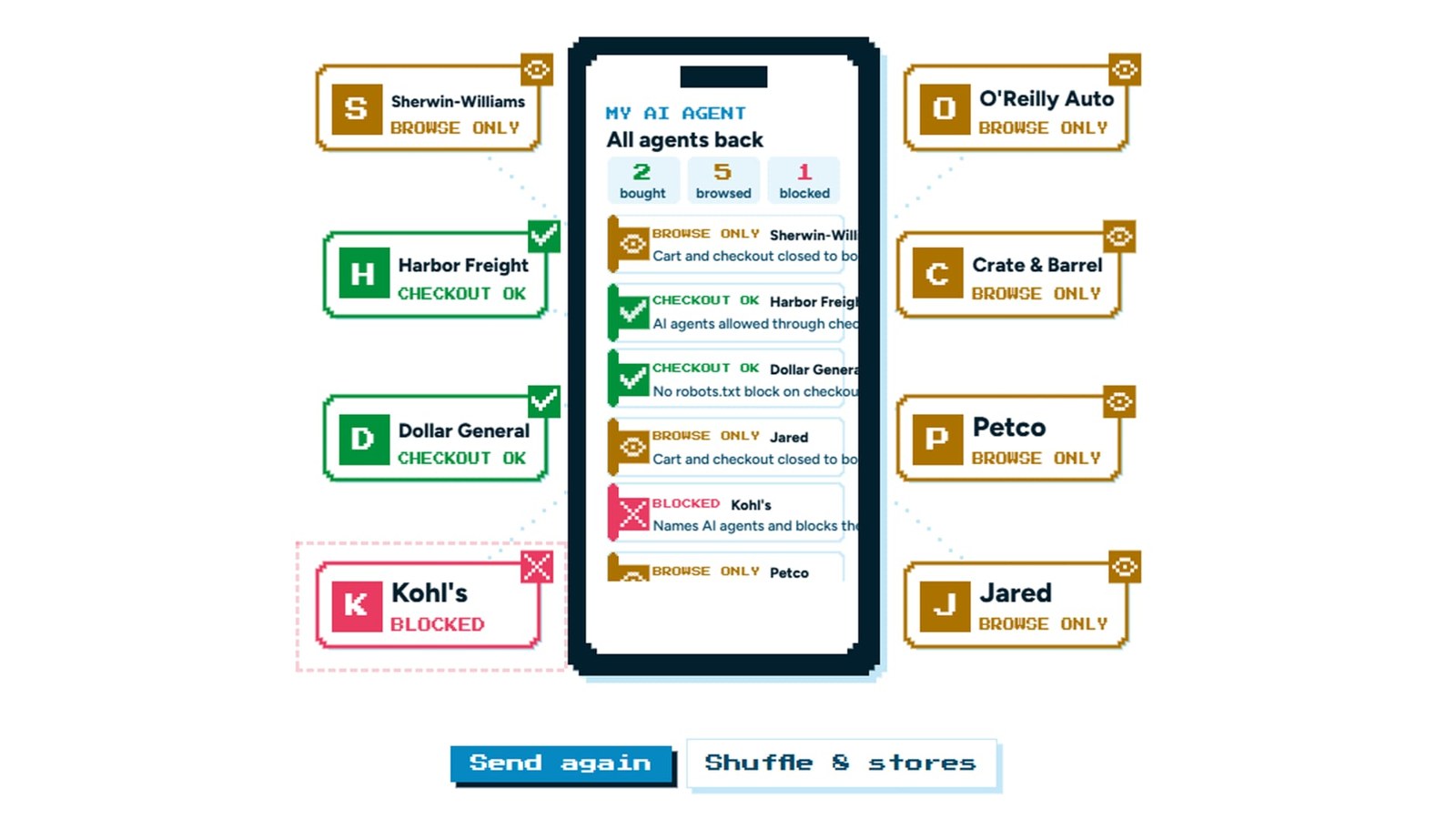
- 🚧 Amazon, eBay, United Airlines and Kohl's limit agents or block them outright.
- 🧪 In a Visa test, agents failed in about 43% of shopping attempts.
- 🔒 Retailers fear fraud because they cannot check whether a real person stands behind a bot.
🛒 On Black Friday, the biggest shopping day in the US, AI agents that search and pay on their own still barely register. According to Bain & Company, such purchases make up 0.4 percent of online transactions worldwide and 0.2 percent of value, CNBC and South Korea's Yonhap news agency report. Uber said agents booked only 504 rides and orders in its busiest week in October, and DoorDash has counted only 'several hundred' agent orders so far. 🚧 Two things hold them back: many retailers do not let agents in, and many customers do not trust them. Amazon, eBay, United Airlines and Kohl's limit what agents may do or block them entirely, while Walmart and Sephora have opened up. Retailers fear fraud because bots lack the signals they use to recognise real people. Then there are the failures: in a Visa test, agents failed about 43 percent of shopping tasks. Analysts remain optimistic all the same.
🧾 Mishaps in practice. CNBC describes fintech executive Maia Bittner, who let Meta's Muse agent buy windshield wipers from AutoZone. Seventeen hours later the agent reported the order had been cancelled because of an error and advised her to order on Amazon herself. In another search, Muse suggested an unknown retailer without reviews offering 75 percent off. According to the report, agents often get stuck at login during checkout or need a person to solve a Captcha.
🧪 What the tests show. Visa had 22 models from 12 AI labs carry out shopping tasks such as buying a TV or a laptop. About 43 percent of runs failed; in more than half of those, the agent bought a product that did not meet the customer's requirements. According to Yonhap, even the best model reached a success rate of only 82.2 percent.
🔒 Why retailers block. Software company Human Forward examined 200 websites of major retailers and brands, Yonhap reports: about half did not let agents such as ChatGPT, Gemini or Muse shop. Amir Sarhangi, chief executive of San Francisco start-up Skyfire, points to missing signals: agents often mask their origin through data centres and pay with one-time virtual cards. Merchants and banks, he says, want to know who the end user is and that it is a real human. Some observers also see a business motive: when an agent shops, nobody sees the platforms' paid product placements. Amazon chief executive Andy Jassy says the company expects to partner with third-party agents over time but needs the right value exchange.
⚖️ Who is liable. There is no common rule yet. Since April, American Express protects eligible customers from charges caused by agent errors, and Stripe offers a refund guarantee for some purchases. JPMorgan Chase has blocked external agents from acting for customers. Best Buy's terms treat agent purchases as if customers made them themselves.
🙋 Shoppers hesitate. In a Morning Consult survey for Visa cited by Yonhap, 54 percent of US adults have used AI while shopping, up from 47 percent a year earlier, but only 23 percent trust it with the purchase decision including payment. In an American Express survey, 52 percent would leave groceries or cheap everyday items to an agent, but only 15 percent electronics, the core of Black Friday.
📈 Looking ahead. McKinsey and ICSC see up to $1 trillion in US agentic commerce revenue by 2030. Walmart this week promoted its Meta partnership for agent-hunted Black Friday deals. Meta chief Mark Zuckerberg said in October that about a quarter of Muse's 10 million users shop through the agent, spending $200 per order on average. According to Fortune, as cited by Yonhap, Amazon is negotiating behind the scenes about lifting its block on Muse.