🛒 Autonnel: open-source funnel builder generates shop pages from a prompt for Shopify and WooCommerce
In brief
- 🛒 Autonnel generates landing, checkout and upsell pages from a description and connects them to Shopify, WooCommerce or Picocart.
- 💶 Free to self-host under Apache-2.0; the managed cloud costs a flat $29 a month with no revenue share.
- 🤖 An analysis agent checks funnel data with your own language model; an MCP server opens funnels and orders to other AI agents.
🛒 Autonnel is a funnel builder for online shops whose code is published under the Apache-2.0 licence. A funnel is the sequence of pages that takes a visitor from an ad click through the product page and checkout to an extra offer after the purchase. With Autonnel you describe the outcome you want in a sentence, and an AI agent assembles landing, checkout, upsell and thank-you pages from ready-made components, including generated images. The pages sit on top of an existing shop: Shopify, WooCommerce or Picocart, the same maker's open-source shop software. Orders are written back to the shop, and payments run through Stripe or PayPal. 💶 According to the [project page](https://autonnel.com), the software is free to run on your own servers with Node, Docker or Cloudflare Workers; those who would rather not operate it pay a flat $29 a month for the managed cloud, with no share of revenue. Building and testing there is free; payment starts when you bind your own domain. The tool is aimed at merchants and agencies who build their own sales pages and want to keep customer data in their own hands. Anyone without a shop, or without the appetite for servers, a database and updates, is not the audience for self-hosting, though the cloud version remains an option.
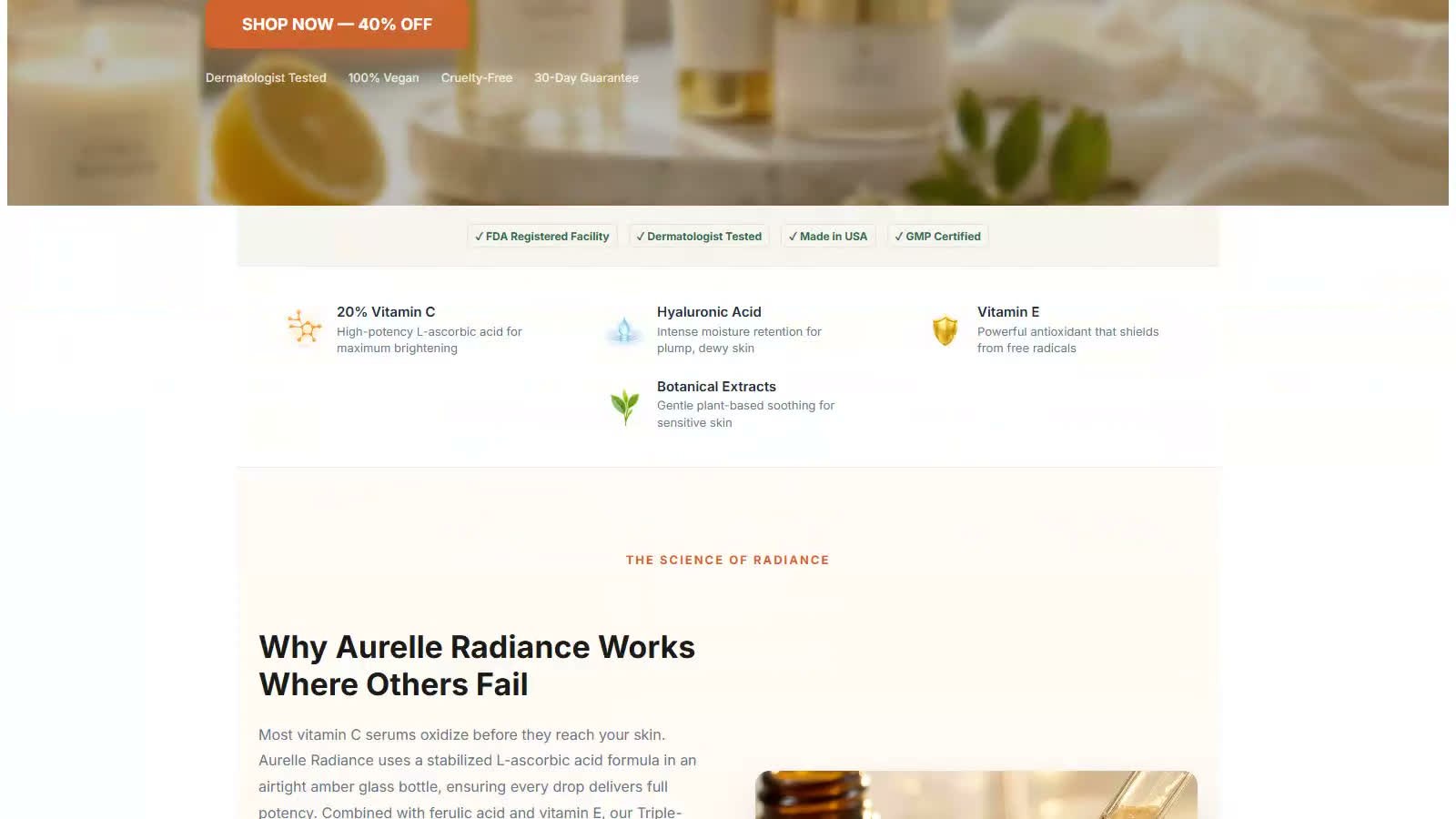
🧩 **How the build agent works.** According to the maker, the agent does not paste in loose HTML but places real components on a canvas, which you can then edit by drag-and-drop or as raw HTML. Every edit is stored as JSON, so changes can be compared and traced. As an example, the website shows a landing page for a vitamin C serum with an offer section, trust badges and ingredient highlights that it says was generated from a one-line prompt.
📊 **A second agent for analysis.** A scheduled job sends the funnel data to a language model chosen by the operator and alerts the team when a step starts to slip. The examples on the website include a checkout drop for visitors from the EU and a heavy hero video pushing up the mobile bounce rate; the maker labels those figures explicitly as sample data. The analytics themselves run on DuckDB with 17 built-in payment and form events, without Google Analytics or a data warehouse.
🛍️ **What else is included.** According to the project page, the feature set covers:
- server-side conversion events sent to Meta, TikTok, Google and Bing, with the click ID carried from the ad click to the sale;
- post-purchase offers paid with the card already on file, without a second checkout;
- A/B tests at funnel level;
- multi-step emails to customers who abandoned checkout, with a coupon per step, which stop as soon as the order is paid;
- any number of domains on one deployment, roles and permissions, and rules that route visitors to specific pages.
🤖 **Open to other agents.** Autonnel ships with an MCP server and ready-made Claude skills. With keys limited to specific permissions, external AI agents can read and write funnels, pages and orders. The maker also publishes guides as agent skills, for instance for the path from an empty server to a published funnel.
⚙️ **Running it yourself.** The maker recommends Docker for a first look and Cloudflare Workers for production: funnel pages are mostly static, and the free Workers plan covers 100,000 requests a day, with 10 million for $5 a month. A PostgreSQL database is also needed. Those who want to change Autonnel itself build it from source with Node. Paid templates and plugins are bought one by one on a marketplace when self-hosting; the cloud version includes them.
🔒 **Where responsibility stays.** Running your own checkout also means taking on obligations. In a blog post the maker explains which parts of the PCI card security standard remain with the operator when self-hosting; the card numbers themselves go through Stripe and PayPal. Anyone who does not want to handle updates, backups and uptime is better served by the cloud version.