🎓 Scolast: an AI tutor that lets you move on only once you have mastered the material
In brief
- 🎓 Scolast is an AI tutor for self-learners, built on Benjamin Bloom's principle of mastery learning.
- 🧩 A few diagnostic questions find your level; exercises are graded and teaching continues at the exact gap.
- 🧠 The maker currently names Claude Opus 5.5 as the model.
- 💶 No subscription: pay as you go at model cost plus 10 percent, 50 cents to 1 dollar an hour according to the maker; 3 dollars free credit.
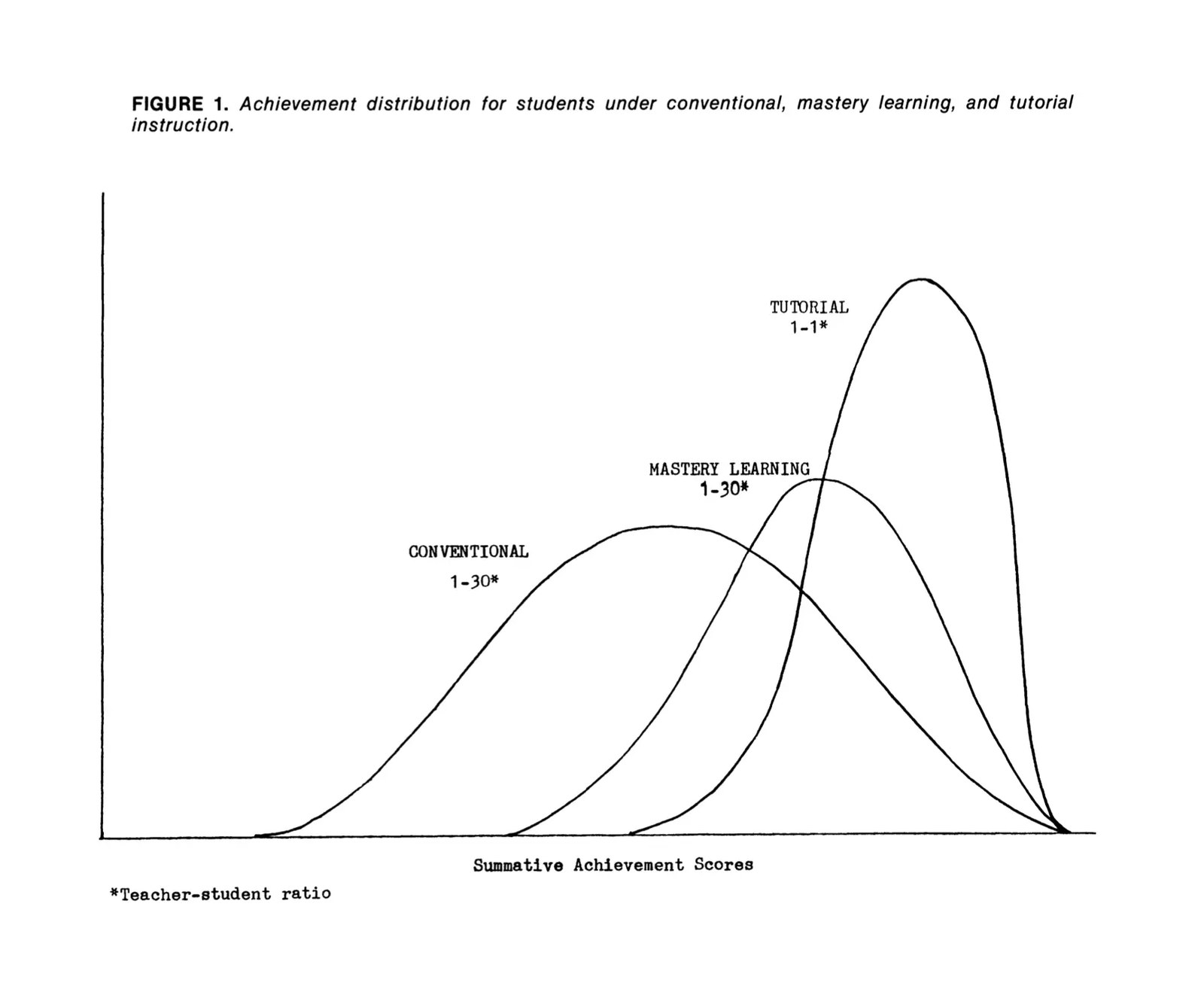
🎓 Scolast is a new browser-based AI tutor for people who want to teach themselves something, from Lagrangian mechanics to reading a Spanish newspaper. Its developer launched it on November 27, and it can be used right away. The idea comes from learning research: in 1984 the education researcher Benjamin Bloom reported that students tutored one to one with mastery learning scored two standard deviations above students in a conventional class. Mastery learning means you only move on once you can show you have understood. Scolast sets out to do exactly that instead of handing over quick, finished answers the way a chatbot does. 🧩 You name a learning goal, answer a few placement questions, read short lessons and solve exercises. The tutor grades them and picks up where you went wrong. The [Scolast page](https://scolast.com) currently names Claude Opus 5.5 as the model. 💶 There is no subscription: you pay for use at model cost plus 10 percent, which the maker puts at 50 cents to 1 dollar per hour of learning. New users get 3 dollars in credit.
🔬 **Where the number comes from.** Bloom based his 1984 paper in the journal Educational Researcher on the dissertations of his doctoral students Joanne Anania and Arthur Burke at the University of Chicago. They compared three groups learning the same material: a conventional class of about 30, a class of the same size taught with mastery learning, and one-to-one teaching by a tutor, also with mastery learning. The mastery class ended one standard deviation ahead of the conventional class, the tutored students two. About nine in ten tutored students reached a level that only the top fifth of the comparison class reached. Bloom called it a *problem* because a tutor for every student was too costly for most societies. That is the sentence Scolast builds on.
✍️ **How a lesson works.** The maker's site shows examples: a Spanish learner translates a sentence like "Yesterday I went to the market" for placement; if the words are right but the verb is left unconjugated, teaching starts with the past tense. In a physics lesson on Lagrangian mechanics, partial steps are graded one by one; if only assembling the equation of motion is wrong, the tutor explains that step and sets another exercise. Selecting a tricky line brings up a short explanation in the margin without losing your place. Learning goals can be grouped into subjects.
🛠️ **Why it was built.** The developer, who posts on Hacker News as PavleMiha, writes in his launch post that he was learning physics with Claude and got frustrated with the interface: he had to interrupt the conversation for quick side explanations, and Claude had no good way to ask him questions. Besides the margin notes he added worksheets and has been working on the tutor's voice, which in his words should focus on the whys and the experiments behind a piece of knowledge. He says he now retains physics he never retained before, and his wife used Scolast for language learning and to pass a yoga exam. He also calls learning this way tiring: you read every word carefully.
💶 **What it costs.** There is no monthly fee. Scolast charges the model's cost plus 10 percent, which it says is its only income. A typical hour costs 50 cents to 1 dollar including the fee, according to the site, because tokens are only spent when the tutor replies and most of the time you are reading, thinking and writing yourself. The maker promises not to switch quietly to a cheaper, older model. The 3 dollars of starting credit last while his budget lasts, the developer says. Later he wants to connect existing AI subscriptions and has applied to an OpenAI programme for that.
🤔 **Who it suits.** Scolast is aimed at adults who want to really master a subject and are willing to solve exercises rather than just read. Anyone who needs a quick answer to a single question is better served by an ordinary chatbot; that is exactly the behaviour Scolast avoids. Bloom's study measured students with human tutors; whether an AI tutor reaches the same effect is not shown by it, and the maker publishes no measurements of its own. A sample lesson on the site lets you try it first.