🛂 Macau plans AI policing, anti-phishing software and biometric border checks
In brief
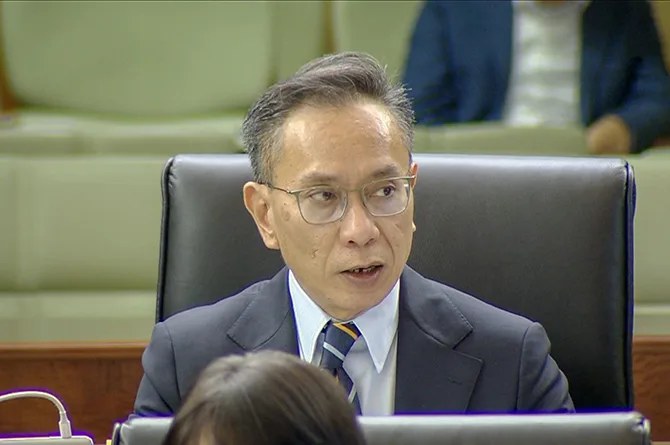
- 🏛️ Security Secretary Chan Tsz King set out the plans to lawmakers on Wednesday.
- 👥 AI tools are to predict crowd movements and help manage flows.
- 🎣 New AI software is to spot phishing images, videos and messages.
- 📹 Surveillance cameras are expected to exceed 2,400 by 2027.
- 👁️ Face and iris checks for drivers are due at Hengqin Port by the end of 2027.
🛂 Macau wants to lean more on AI in policing and border control. Secretary for Security Chan Tsz King told the Legislative Assembly on Wednesday that AI tools would be applied to predict crowd movements and manage flows. Against online fraud, his office plans new software with the Judiciary Police that uses AI to detect images, videos and messages tied to emerging phishing schemes. 🎣 Other plans have no stated AI link: the "Eyes in the Sky" surveillance system is expected to grow to more than 2,400 cameras by 2027. At Hengqin Port, drivers are to be identified contactlessly by face and iris by the end of 2027, without leaving their vehicles. 📅 These are announced plans.
🏛️ The frame is next year's security policy, which Chan said will be aligned with the Third Five-Year Plan, with a focus on national security, smart policing, border integration and civil protection. He was answering lawmakers' questions about specific measures. According to the [Macau Daily Times](https://macaudailytimes.com.mo/security-sector-to-expand-ai-policing-upgrade-border-controls-in-2027.html), the [Secretary for Security](https://www.gss.gov.mo/) also restated legal work: preliminary steps to amend the Cybersecurity Law are to begin next year. The government also intends to refine rules on internet data security, advance anti-money laundering legislation and strengthen counterterrorism efforts, including drills and emergency exercises.
🚁 Alongside AI crowd prediction, police technology plans include drones and 3D scanning for traffic and border control. Customs Service operations are also set to use more AI tools and drones, including for border monitoring and maritime surveillance. The report names no models or suppliers.
📹 Phase Six of "Eyes in the Sky" is to cover new places: the public housing estate on the site of the former CEM power plant on Avenida de Venceslau de Morais, Zone A, the Barra light rail station and the Islands Healthcare Complex.
👁️ The biometric check is planned for the vehicle One-Stop lanes at Hengqin Port, introduced by the authorities on both sides. The system is described as the most advanced of its kind and the first in China to receive this upgrade; the report cites no independent assessment of that. The government also plans a new Hengqin Port checkpoint on the University of Macau campus, where residents of Macau and Hong Kong would cross using a single identification document.
🎣 The anti-phishing plan came up as several lawmakers voiced concern about the high number of cybercrime and online fraud cases, particularly phishing that has caused substantial financial losses. Chan called tackling cybercrime one of next year's priorities. The software is meant to identify new forms of fraud as early as possible and keep them from reaching residents. He said banks, the wider financial sector and telecom operators would also need to take part. The report gives no launch date and no detection figures.
👮 Technology is also expected to ease a staffing gap. Officials acknowledged that a significant number of officers are likely to reach retirement age next year, and some lawmakers worried about staffing and heavier workloads. Chan said the services were recruiting and training new personnel as quickly as possible, and that better technology and more advanced equipment would support officers. He is open to studying extra pay to attract more residents, including changes to existing allowances, but gave no timeline.
🎪 Lawmaker Song Pek Kei suggested letting private security staff hired by gaming concessionaires and event organisers handle some crowd control at large events. Chan acknowledged that the growing number of events adds pressure on the security sector, but said arrangements had become more sophisticated, with interdepartmental assessments before each one.
⚖️ The report says nothing about privacy safeguards for the cameras or biometrics, or about what the projects will cost.