🇮🇩 After Nvidia's shipment halt, Indonesia's digital minister bets on licences and talks with the US
In brief
- 🛑 Nvidia has reportedly stopped AI server deliveries to Indonesia, Malaysia, Singapore and Thailand for now.
- 🏛️ Digital minister Meutya Hafid says exports remain possible and the US assesses each licence application individually.
- 📭 Her ministry says it has not yet received any official notice from the server makers.
- 🤝 Jakarta plans three steps: a joint position, tighter oversight of data centres and talks with Washington.
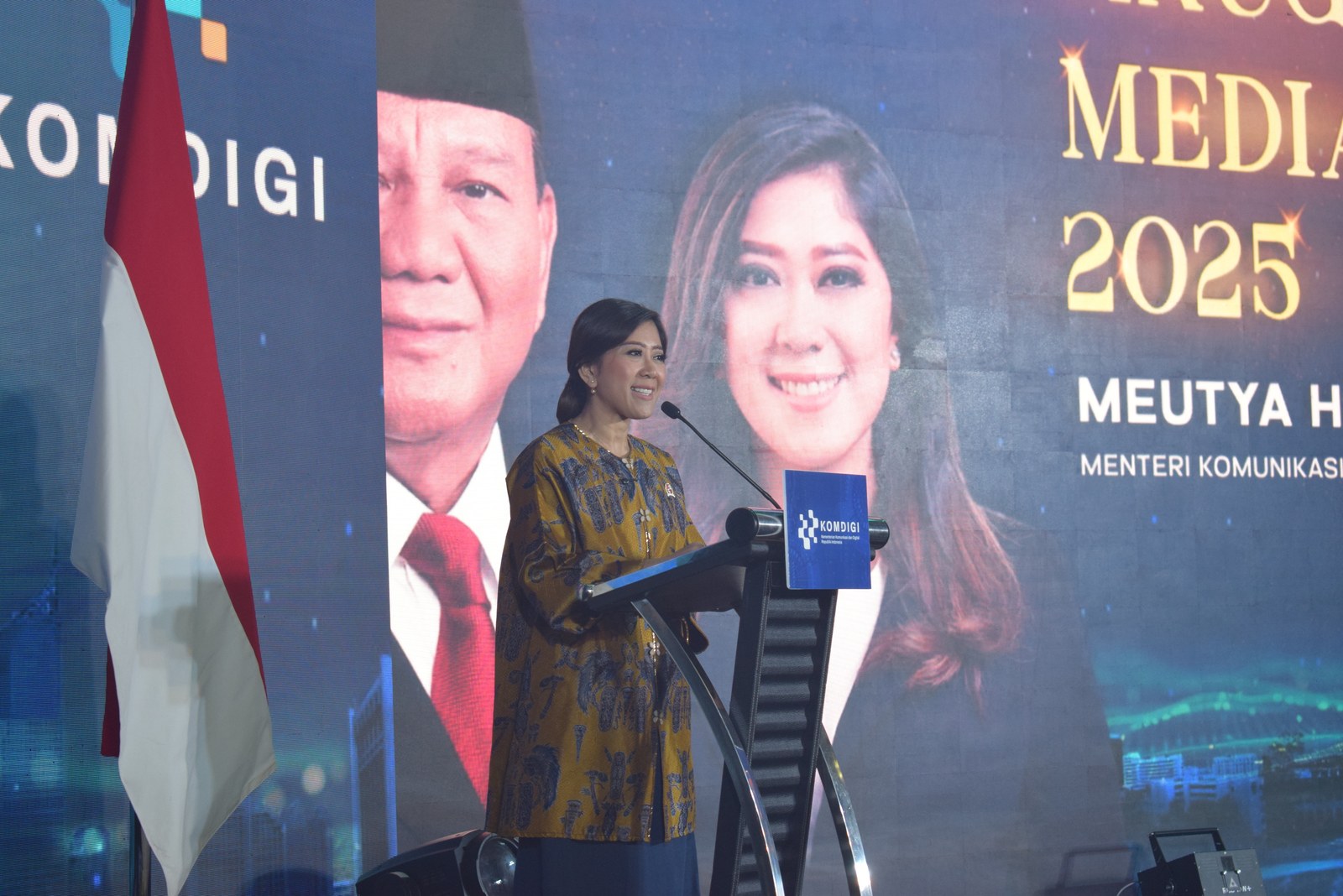
🇮🇩 Indonesia's Minister of Communication and Digital Affairs, Meutya Hafid, responded in a written statement on Friday, 27 November, to reports that Nvidia has told its manufacturing partners to stop shipping servers with its chips to Indonesia, Malaysia, Singapore and Thailand. Behind it is an interim rule of the US Commerce Department: since 19 November, certain AI chips and AI servers for these four countries and Brazil need a US export licence. 📄 The minister stresses that such shipments to Indonesia remain possible and that applications are assessed one by one. Her ministry, she says, has not yet received official notice from the manufacturers that halted the deliveries. She acknowledges short-term uncertainty for companies building AI infrastructure and data centres, but points out that most AI services people use, such as recommender systems, fall outside the rule. 🤝 The government plans to agree a joint position across ministries, to enforce the law and strengthen oversight, and to clarify with the US how the rule is applied and on what conditions licences are granted. "Indonesia chooses the path of dialogue," Hafid writes.
🔎 **What the minister asks of data centres.** The sharpest line of her statement is aimed not at Washington but at Indonesia's own industry: the country does not tolerate misuse of its digital infrastructure, Hafid writes, according to CNN Indonesia. Data centre operators should know who their customers are and what those customers use the computing power for. The minister names the two principles in English: *Know Your Customer* and *Know Your Customer's Workload*. That is exactly the point the US rule targets: Washington wants to stop Chinese companies from reaching advanced Nvidia chips through data centres in third countries when they cannot buy them directly.
🛑 **What is known about the halt.** According to the Financial Times, as cited by Reuters and CNN Indonesia, Dell and Supermicro, which build servers with Nvidia chips, told customers in the four countries that Nvidia would not allow their orders to ship. Three people familiar with the matter said it is unclear whether the halt is only temporary while Nvidia and its partners adjust to the new export rules. The rule itself was issued by the Commerce Department's Bureau of Industry and Security (BIS) on 16 November as an *interim final rule* and has applied since 19 November.
🏢 **Megaspeed and the background.** At the centre of the US investigations is Megaspeed, a Singapore-based company that rents out capacity in its data centres and is suspected of illegally diverting advanced AI chips to China. It has an Indonesian subsidiary, Megaspeed International Indonesia. Indonesian police confirmed a request from the FBI to look into the alleged smuggling, Katadata reported on 18 November, but said at the time that they had not carried out a search in the case.
📈 **What is at stake for Indonesia.** The country wants to become a regional hub for data centres and depends on imported semiconductors to get there. Statistics office data cited by the Business Times show Indonesia imported semiconductors worth 3.3 billion US dollars from January to July, up 21.8 percent on the same period a year earlier. On 17 November, Haryo Limanseto, spokesman of the Coordinating Ministry for Economic Affairs, had already said the government would assess the impact on supply chains and investment with authorities and industry. The digital minister's statement is the first reaction since the shipment halt became known.
⏳ **Why uncertainty is expensive.** Singapore-based AI adviser Matthias Hendrichs told broadcaster CNA, as quoted by Katadata, that the bigger short-term problem is uncertainty: if you cannot tell lenders when the chips will arrive, financing is delayed. New projects could slip by months. Under the rule, data centres outside the US that provide significant computing power to companies headquartered in China need a US licence by around mid-February 2027 to keep operating.
⚖️ **A gap in Indonesia's own law.** Researcher Maria Monica Wihardja of the ISEAS-Yusof Ishak Institute points out, according to Katadata, that Singapore and Malaysia have their own export-control or strategic-trade laws while Indonesia does not: it relies on scattered customs, trade and sector rules. She suggests a dedicated law on strategic trade management. The minister's statement does not say whether the government will go that way; it speaks of enforcing existing rules and better oversight.
🌏 **What comes next.** Hafid gives no dates for the announced talks with Washington. She describes the relationship with the United States as a strategic and constructive partnership and wants Indonesian companies that follow the rules to keep access to the technology they need. Nvidia itself has not commented publicly on the reported halt so far.