🌍 UN and Barbados host an AI safety summit in Bridgetown to close the gap in countries' capacity
In brief
- 🌍 UN chief Guterres and Barbados PM Mia Mottley co-host the Bridgetown Special Summit on AI Safety on Monday, November 23.
- 🧭 On the table: a proposed multilateral AI risk framework with independent oversight; not a treaty and not regulation.
- ⚠️ No negotiated outcome is planned, military AI is excluded; about 150 participants, with the US sending a senior diplomat.
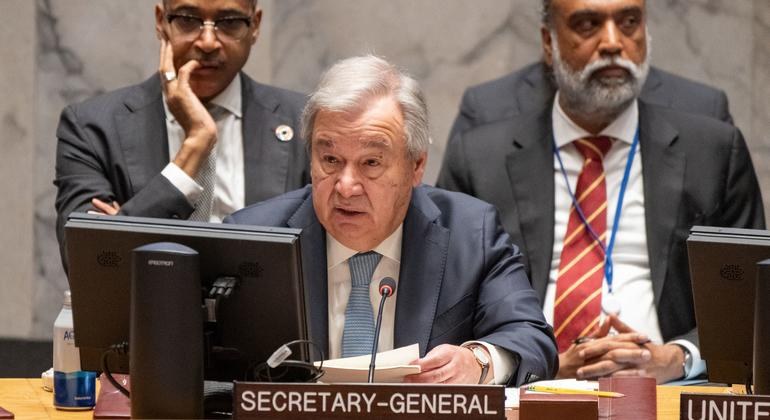
🌍 UN Secretary-General António Guterres is in Barbados to co-host a special summit on AI safety with Prime Minister Mia Mottley on Monday. It aims to narrow the gap between fast-growing AI risks and many countries' ability to deal with them. The summit opens discussion of Guterres' proposal for a multilateral AI risk management framework backed by independent and credible oversight. UN envoy Amandeep Singh Gill says it is not a treaty and not regulation, but a framework countries can use to build national AI safety infrastructure. About 150 participants are expected in a hybrid format, among them ministers from Norway and Finland, AI industry leaders, heads of AI safety institutes and members of the UN scientific panel on AI; the United States sends a senior diplomat and Chinese experts are expected. No negotiated outcome is planned, but calls to action and pledges are expected, and military uses of AI are not on the agenda. 📰 This describes the plan announced before the meeting; the outcome was not yet available.
**The capacity gap.** Gill argues that the need for national AI safety infrastructure is often underappreciated. Many countries lack not only the computing power and talent to develop AI but also the ability to test models built elsewhere and prepare for incidents such as cybersecurity breaches. Citing the World Development Report 2026, he said high-income countries have 500 incident response teams while low-income countries have six. "These AI risks don't recognize borders," he said: a model may be developed in a couple of places, but the risk can travel anywhere.
**Momentum.** At this year's high-level week of the UN General Assembly, 135 leaders raised AI concerns, up from three in 2017, according to Gill. He pointed to two earlier initiatives the summit builds on: a call by Norway and Finland to control frontier AI models, now signed by 32 states and the European Commission, and a call issued at a summit hosted by French President Emmanuel Macron, endorsed by 17 states and 10 AI developers.
**What Guterres will say.** According to his spokesperson, the Secretary-General will stress that AI's benefits are enormous, from strengthening health systems and speeding scientific discovery to transforming education and improving hurricane forecasting, while its risks grow just as quickly. He will say the summit can strengthen national approaches to AI safety while recognising that no single model fits every country.
**Agenda and limits.** A second roundtable focuses on access, inclusion and linguistic diversity, because developing countries fear missing out on AI's benefits. The discussions do not cover military uses of AI. Gill described the situation as a good position in which "action must catch up with the analysis". Because the report is a preview published by UN News before the event, results such as declarations or pledges are not covered here.