📚 Anonymous bulk orders for old books in Seoul: booksellers suspect AI training
In brief
- 📞 A Seoul second-hand bookshop was asked for about 6,000 books, one copy per title, by a buyer who gave no name.
- 🏬 A major bookstore halted a deal for 100,000 titles with about ten overseas firms because the final recipient stayed unknown.
- 🤖 The trade and the newspaper Dong-A Ilbo suspect training data for AI language models; it is not proven.
- 📉 Publishers also fear that AI will shrink the market for study guides.
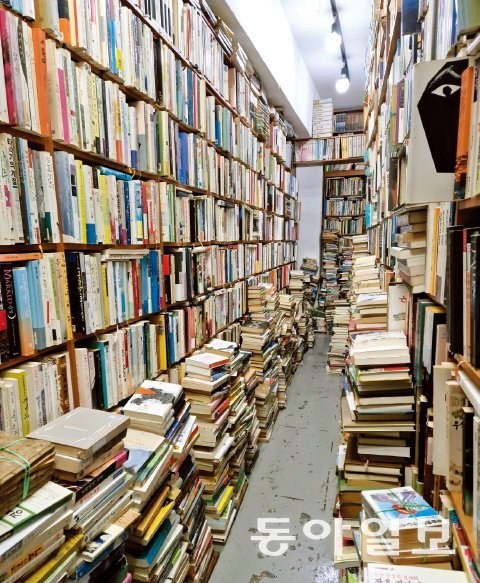
📚 Second-hand bookshops and bookstores in South Korea are receiving unusual purchase requests, the newspaper Dong-A Ilbo reported on 28 November. A bookshop in Seoul's Dobong district was asked by a person who did not identify themselves for about 6,000 books, one copy of each kind. A 50-year-old shop in Seodaemun district got two calls from an unknown number on 23 November asking for rarely requested Korean-studies titles; when the owner called back, the number could not be reached. A major bookstore chain was offered a deal by more than ten overseas companies to buy 100,000 books from every field, one copy per title, and stopped the talks because it remained unclear who would finally receive the books. The online sellers Aladin and Yes24 also received bulk requests. 🤖 Who is buying and why is open. The trade sees the race for training data for large language models as the most likely reason: reliable, unused texts are getting scarce, and the pattern of as many different titles as possible rather than many copies fits. The link is not proven. For many small sellers saying no would still be hard, because prices per book are falling while rent and storage are expensive.
🔎 A pattern for months. The requests are not new. In mid-October the newspaper JoongAng Ilbo reported that the chain [Kyobo Book Centre](https://www.kyobobook.co.kr) had received inquiries since the start of the year from about ten companies abroad, most of them in the US. They wanted around 100,000 different Korean-language titles, any field, but only one copy of each. Kyobo asked for the final recipient; the companies called that confidential. Some denied that the books were meant for AI training, others said the recipient was a data company. Kyobo said it could not rule out AI training and suspended the deals until recipient and purpose are known. Dong-A's description, which does not name the chain, matches this case. In August, according to the same report, a company based in Arizona approached the used-book business of Yes24 and the city-run used-book hall Seoul Book Bogo: it wanted no children's books, and the number of different titles mattered more to it than the quantity.
💬 What the sellers say. The owner of the Seodaemun shop, which holds more than 10,000 volumes and old records, told the paper he would check whether he has the titles asked for. If an AI company were behind the request, however, he would think twice about selling. Books from the Japanese colonial period can fetch more than four million won a volume, he said. Other owners see little room to refuse: online platforms have taken over the used-book market, the price per book is low, and rent and stock are expensive. A seller in Jung-gu district said, in substance, that at his age he cannot keep piling up books forever; a sale to an AI company would make him hesitate, but with an order that large hardly anyone would say no.
🧠 Why books. Good language models need reliable original texts, and texts that have not been used in any training run are harder and harder to find. That AI companies buy printed books is documented: [Anthropic](https://www.anthropic.com) bought millions of print books to train its model Claude, scanned them and then destroyed the paper copies, as the US copyright case Bartz v. Anthropic revealed. In June 2025 a US federal judge held that scanning purchased books was fair use, while copies taken from pirate libraries were not. According to the Japan Book Publishers Association, the wholesaler Nippan also sold new Japanese books to Anthropic for a year from December 2024. None of the reports says who is behind the requests in Seoul.
📉 The second worry: study guides. Dong-A sees publishers under pressure not only over copyright. The market for study guides and workbooks in particular could suffer, because generative AI can write exercises with solutions itself, matched to grade, subject and difficulty. YouTube already carries tutorials with prompts for exam preparation. The national college entrance exam is to use AI as well: the education ministry plans to raise the share of teachers among question writers to 50 percent and to generate exam passages with AI, starting with the mock tests for the 2028 school year.
🌍 Examples from the US. The education publisher McGraw Hill lists generative AI as a risk in its annual report for fiscal 2026: demand for its products could fall significantly or force price cuts. At the study platform Chegg, subscribers and subscription revenue each fell 14 percent in 2024; the company wrote in its filing with the Securities and Exchange Commission that students see ChatGPT and similar products as a strong alternative.
🔄 What could change. Jo Ara of the research institute of the Korean Publishers Association expects AI services trained on existing study material to offer students tailored exercises; instead of buying a finished workbook, they would subscribe to a service. An industry representative said the sector will focus more on education technology. Back in October the Korean Publishers Association decided to survey bookstores, second-hand shops and distributors by letter about such deals, and it joined the Frankfurt Appeal, which asks AI companies to disclose which works they used for training.