🧮 Terence Tao calls for 'Math 2.0': judge mathematicians by how they explain, not by AI-made proofs
In brief
- 🎓 Fields medallist Terence Tao said at Harvard on 16 November that 'Math 1.0' has to move to what he calls 'Math 2.0'.
- 🤖 Because AI solves open problems faster and more cheaply, problem-solving no longer works as a compass, and journals are swamped with AI papers.
- 🧑🏫 His proposal: judge researchers by how well they explain their work at the blackboard.
- 🔍 For the Riemann proof made with Claude, Tao has started a project to produce a readable version.
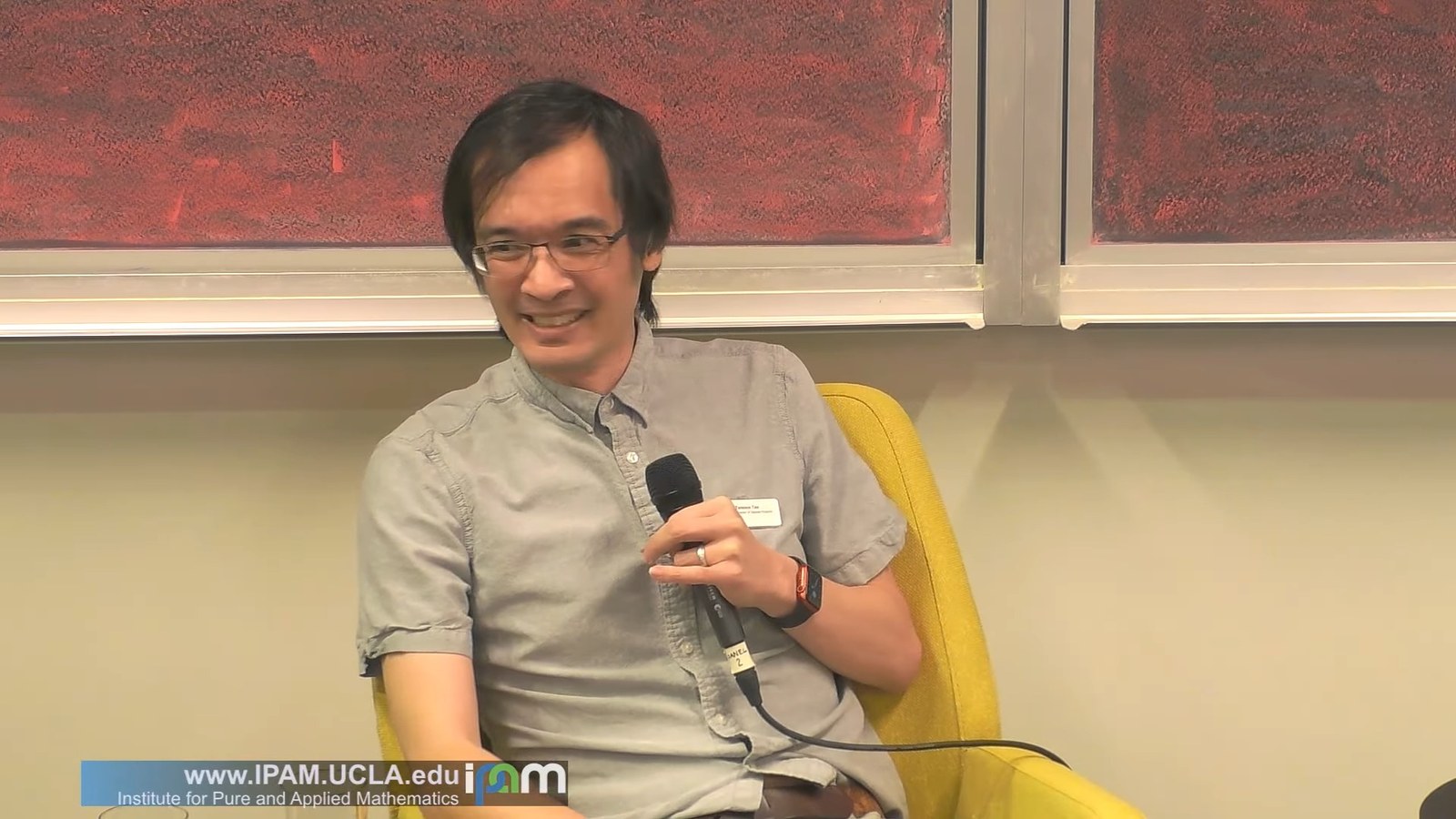
🧮 Mathematician Terence Tao, Fields medallist of 2006 and professor at the University of California, Los Angeles, is calling for a rebuild of his field. At a book event at Harvard on 16 November he said, as reported by Business Insider and the French magazine Numerama, that 'Math 1.0' will have to move to what he calls 'Math 2.0'. 🤖 The background: in 2026, AI labs are publishing proofs at a pace mathematicians cannot keep up with. For Tao, solving open problems can therefore no longer be the yardstick of research, and journal publication is losing value because referees are buried in AI-written papers. Instead, mathematicians should be judged on how well they explain their results to other people, at the blackboard and in conversation. 🔍 How urgent this is became clear days later: Anthropic researcher Levent Alpöge announced a proof of the Riemann hypothesis made with Claude, about 17 million lines of code in the proof language Lean that nobody can yet follow. On 24 November Tao started a collaborative project to extract a proof humans can read. He is not pessimistic: 'Mathematics is infinite,' he said.
📖 **How the remarks came about.** Tao had come to Harvard to present his first book for a general audience, 'Six Math Essentials', in a conversation with mathematician Lauren Williams as part of the Harvard Science Book Talks. He turned to AI when students asked about it. According to the Faculty of Arts and Sciences' account of the event, he lets AI do most of his programming and literature searches but does the mathematics himself. He advised students to sort their tasks into two groups: skills they want to keep, and skills they are willing to lose in order to move ahead.
🏛️ **The idea is not new.** Tao first set out 'Math 2.0' in a public lecture at Caltech on 9 October and posted the slides on his blog the next day. There he writes that the talk was planned more than a year earlier under the title 'Machine Assisted Proof' and changed significantly with recent events. According to Numerama, a commentary in Nature followed on 22 October. In an interview with the Los Angeles Review of Books published on 15 November, Tao describes the future this way: mathematicians will become 'interpreters of results, rather than just raw generators of results.' And: 'We've now invented a machine that can give you answers without giving you understanding.'
🗼 **Problems as lighthouses.** For Tao, a solved problem was never the real goal but an indirect measure of human understanding. He compares great open problems to lighthouses: you head for them to explore the landscape around them, and what you learn on the way is often worth more than the solution. If automated tools reach the lighthouses too early, they risk 'sterilising' the whole surrounding area. Continuing to optimise blindly for problem-solving alone is now 'actively harmful' to the long-term health of mathematics, his slides say.
⚙️ **Why proofs in particular.** Proofs used to be scarce: solving an open problem was hard and rare. But proofs suit machine learning especially well. They can be checked objectively, need no laboratory, and the literature is largely digitised. In the language Lean, a computer checks every step. Tao therefore speaks of an era of 'proof abundance'. He also criticises how labs present their results: one slide shows the famous drawing of a bomber riddled with bullet holes, the textbook case of survivorship bias. One only sees the successes, never the failed attempts. Tao calls for transparent evaluations that report the computing power used and negative results, and names the First Proof initiative as a step in that direction.
🧪 **Misaligned mathematics.** In Tao's grid, a lot of AI combined with little human understanding produces 'misaligned maths', a term borrowed from AI safety. He offers a thought experiment: an AI invents a cancer treatment that passes a phase 3 trial, with a Lean certificate, but nobody knows how it found it. Would you accept the injection without at least one oncologist understanding, even partly, how it works?
🔢 **The Riemann case.** Alpöge's proof fits this pattern exactly. It consists of about 17 million lines of Lean code and a four-page accompanying document. According to Nature, as reported by Numerama, Andrew Granville of the University of Montreal finds the document 'confusing' and criticises its release only days after Anthropic's stock market debut. Fields medallist James Maynard, by contrast, expects the proof to hold up, while conceding that for now it is incomprehensible code. The Lean FRO and the Mathlib Initiative, which maintain Lean and its mathematics library, declared 'full confidence' in the proof on 21 November. Tao's project of 24 November with mathematicians Anurag Sahay, Will Sawin and Lior Silberman aims to turn it into a readable proof. How fast the field is moving shows in Tao's own forecast: as recently as October, on the Numberphile podcast, he expected humans aided by AI to make no progress on the Riemann hypothesis before 2050.
🛠️ **What AI should do instead.** For 'Math 2.0', Tao proposes other uses: finding clear explanations for results whose proofs remain obscure, enriching formalised libraries such as Mathlib, or testing what remains of a theorem when some of its assumptions are changed or removed. Caltech students held a 'mathathon' from 13 to 15 November in which participants used open-source AI tools to find better proofs of known results. Tao also announces open-source mathematical models 'very soon', without giving a date.
🌅 **No reason to flee.** Tao did not advise doctoral students to drop everything and join an AI start-up. The future of mathematics is 'actually quite bright', he said at Harvard: there will always be a frontier to push, including where AI will not necessarily go.