📺 c't 3003 lets the Codex AI agent rebuild a Samsung TV: faster and with fewer ads
In brief
- 📺 The c't 3003 team had OpenAI's Codex agent rebuild the Tizen interface of a six-year-old Samsung TV, without writing code themselves.
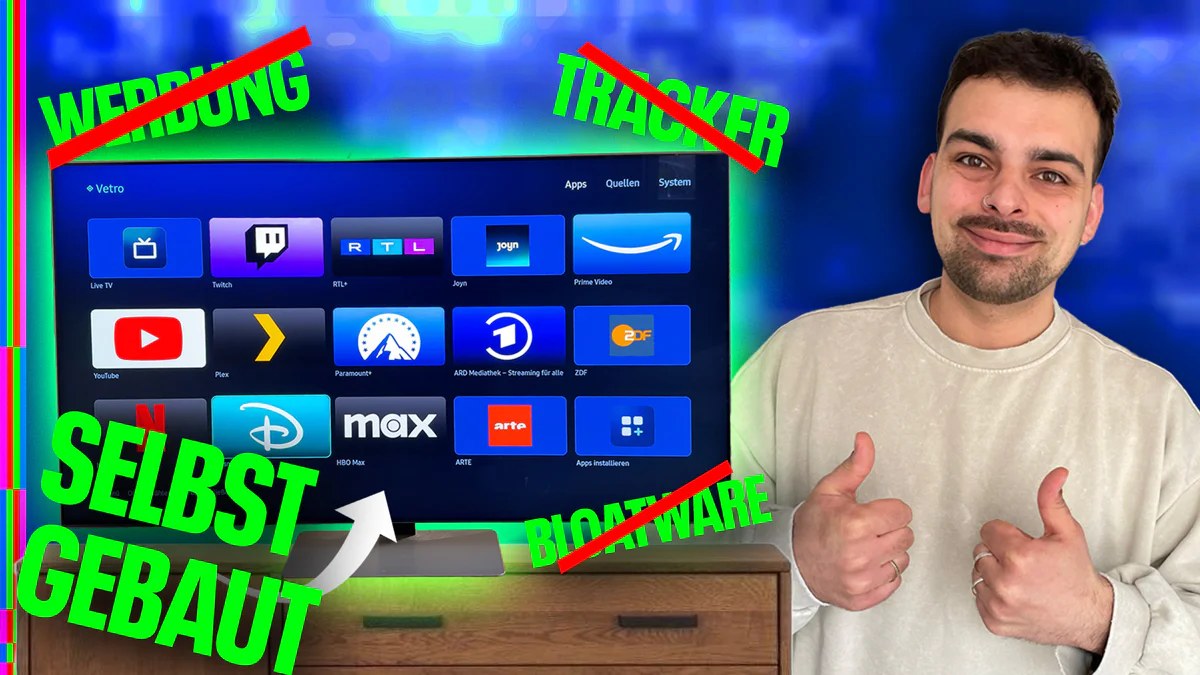
- 🧩 The basis is Vetro, an open-source launcher and debloater for Samsung TVs; Codex turned it into an Apple TV-style home screen.
- ⚡ The menu responds much faster; Codex says ten advertising and tracking components are off, which has not been measured yet.
- ⚠️ It needs root access and developer mode, and can break the TV.
📺 Slow menus and ads on a smart TV: Sahin Erengil of c't 3003, the YouTube channel of the German computer magazine c't, tested whether an AI agent can fix that. He had OpenAI's coding agent Codex rebuild the interface of his six-year-old Samsung TV running Samsung's Tizen operating system, by his own account without any programming knowledge, just giving instructions from a laptop on the sofa. 🧩 The basis is the open-source project [Vetro](https://github.com/andrearicci93/vetro), a launcher, debloater and key remapper for Samsung Tizen TVs. Codex prepared the installation, pushed it to the TV over the home network and added features on request until the TV had an Apple TV-style home screen. The menu now responds noticeably faster, and according to Codex ten advertising and tracking components are disabled; the tester has not verified that yet. ⚠️ It is no free pass: the agent needs root access to the TV and could, in the worst case, break it for good. Code from the internet also carries risks such as prompt injection. c't 3003 therefore stresses that anyone trying it does so at their own risk.
🛡️ How much the agent may do. Erengil gave Codex access only to a project folder plus the internet and his home network; for anything else the agent had to ask. He deliberately did not grant full access to his computer. The safest setup, he says, is a separate machine or a Docker container for the agent, since the many layers of settings in the app, configuration files and the operating system are hard to keep track of. As the model he says he used GPT-6.1 Sol and GPT-6.2 Sol at medium reasoning, which he found sufficient for this kind of project.
🔎 Finding a project for Tizen. The well-known toolkit CleanYourTV is built for Android TV and Google TV and does not fit Samsung's Tizen. Erengil therefore asked Codex for alternatives, and the agent suggested Vetro. According to its project page, Vetro works on selected TVs running Tizen 6 to 10, depending on model and firmware, and needs root access for the launcher, privacy switches and remapper. Other projects such as FreeMyTV partly work without root. Erengil created his own copy (fork) of Vetro on GitHub so that Codex could not just install the code but freely change it, and gave the agent access through the GitHub plug-in of the ChatGPT app.
🧾 The process. His first instruction was, in essence: prepare everything locally, ask for the needed access first, back up the TV's original state and document how to restore it, and install only after approval. Codex asked for Apple's command line tools and proposed the open-source tool Apps2Samsung, which installs apps outside Samsung's app store. After about 15 minutes of preparation, Erengil had to switch on the TV's developer mode, enter his laptop's address and obtain a signing certificate through his Samsung account. About ten minutes later, pressing the Home key brought up the new launcher.
⏱️ Fixes on request. After a full restart the launcher at first took around 100 seconds to appear; after Codex fixed a start-up error it was 50 and in the end about 30 seconds, while waking from standby it is there at once. On request Codex switched off Samsung services Erengil did not need while keeping features such as AirPlay. He then had a button for adding apps built, improved its look by sending a photo as feedback and had the interface moved towards an Apple TV look: big icons, full screen, tiles that can be moved. The agent declined to add Apple's own icons for licensing reasons, so Erengil supplied a repository with similar icons instead.
💶 What it cost. Erengil puts the computing effort at roughly one week's quota of his ChatGPT Plus subscription at 22 euros a month; larger projects would hit the limit sooner or later. How far the tracking is really switched off is to be measured in the c't lab.
🎬 The video is more a field report than a tutorial: the route depends on the TV, the AI model and what the agent decides to do. For Erengil the test shows how far coding agents can take non-programmers today, something he calls fascinating and also a little creepy.