🇮🇱 Miriam Haart: Israel should build its own frontier AI model, as it once built the Iron Dome
In brief
- 🗣️ Founder Miriam Haart argues in the Jerusalem Post that Israel should put the development of its own frontier model in the 2027 state budget.
- 🛡️ Her comparison: just as Israel had the Iron Dome built at home, it should not license AI for defence from abroad.
- 🏛️ She leans on Erez Askal, head of the National AI Directorate, who targets 300,000 chips.
- 💶 According to Haart, the funding is not yet committed.
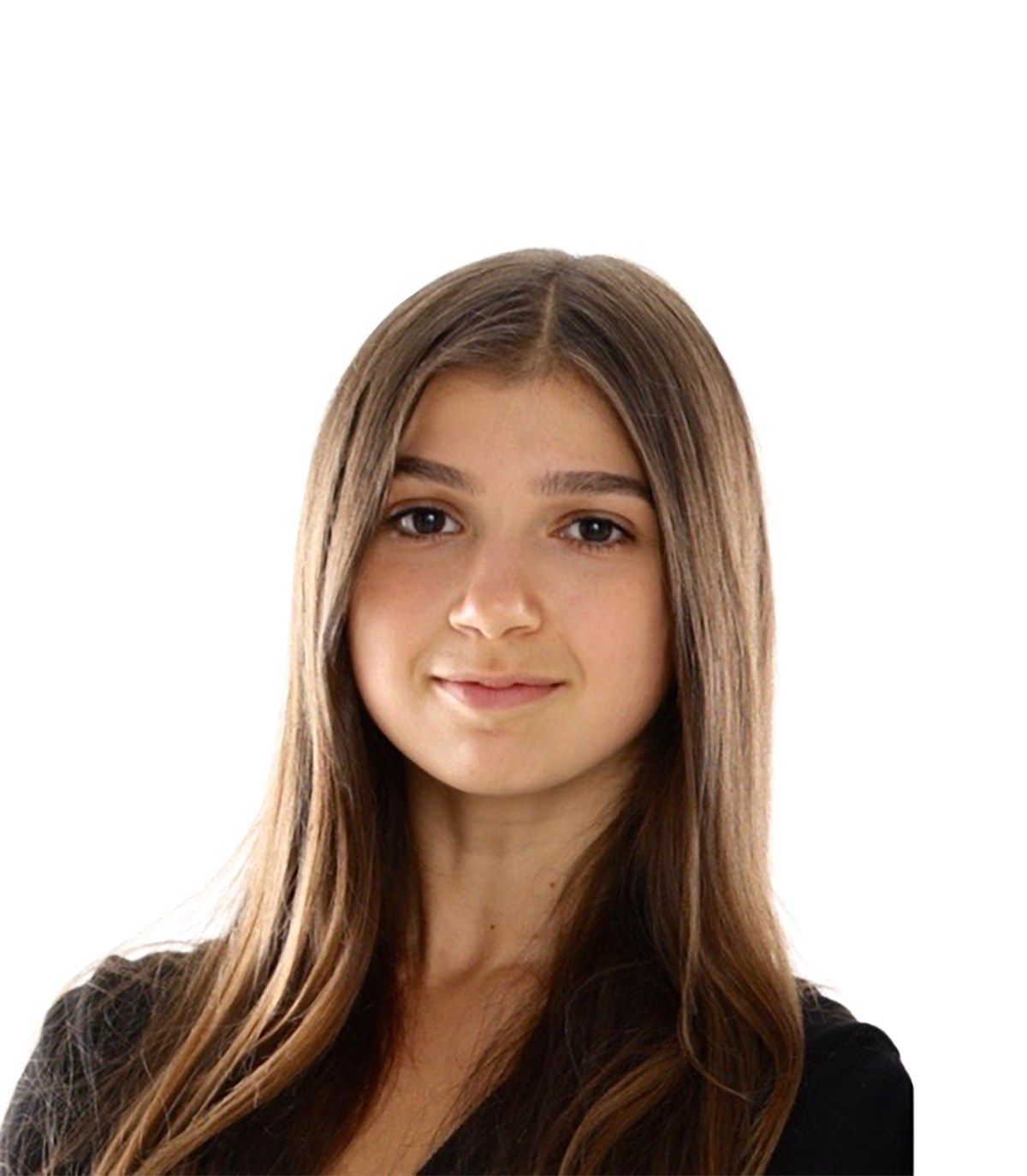
🗣️ Miriam Haart, founder of Haart AI and a former Stanford lecturer, argues in an opinion piece in the Jerusalem Post that Israel needs its own large top-tier AI model. Anyone attacked through networks with AI can only defend fast enough with AI, she writes, and a country that does not own such models will have to ask permission when it counts. Her demand: the next government should write the development of such a frontier model into the 2027 budget. 🛡️ Her model is the Iron Dome, which Israel had the domestic defence company Rafael build from 2007. In the same way the state should fund a private company to develop a model. As a warning sign she cites that Israel's National Cyber Directorate did not get immediate access to Anthropic's withheld model Claude Mythos. 🏛️ Haart draws on Erez Askal, head of the National AI Directorate, who in November named an own frontier model and about 300,000 graphics chips as goals. This is her opinion, not adopted policy; Askal gave neither a budget nor a timetable when he presented his plan.
⚔️ Her picture of the threat. Haart describes AI as a new form of attack that comes not through the sky but through data centres. She points to a Microsoft report that the hacking group Storm-0940 aimed one AI agent at more than 2,250 organisations at once in October and in some cases broke in within three hours. She also mentions the November outages at Microsoft services, in US air traffic and at payment services, but concedes herself that officials do not classify any of them as a cyberattack. Her conclusion: a human team is too slow, only AI can stop AI, and whoever controls the strongest models controls the strongest defence.
🤝 Doubts about the ally. Haart presents the missing access to Claude Mythos as the core of the problem. According to her account, Anthropic gave the model in April only to selected organisations so they could close security holes first. She quotes Yossi Karadi, head of the Cyber Directorate, as saying he had not yet obtained access but hoped to. Together with what she describes as President Trump's announcement that the US will end four billion dollars a year in military aid, she reads it as a lesson: on defence, Israel must rely on itself.
🧩 What Israel already has. Haart sees a head start: Nvidia runs one of its largest research centres outside the US in Israel, Israelis hold senior jobs in American AI labs, the company AI21 Labs trains its own large models, and since January there is a national AI supercomputer. By her account, though, it runs on about 1,000 advanced chips, while Askal's goal is 300,000. She puts the need at an estimated two to five billion dollars a year, none of which, according to the Times of Israel, has been committed.
🌍 Other countries as examples. She points to France and Mistral AI, which she says raised three billion euros in September and supplies the French armed forces with models on French-controlled infrastructure, to the United Arab Emirates' Falcon model, and to China, which built capable models despite chip export restrictions. These models fall short of the American ones, she writes, but are largely sovereign.
🏛️ What the government itself says. Askal presented his strategy on 9 November at AI & Cyber Week at Tel Aviv University. According to a Ynet report he also said there that Israel must build its own frontier model, but not alone, possibly together with allied countries facing similar problems. Of the 300,000 chips, about 100,000 would serve universities, government agencies, the military and startups, the rest companies and data centres; about two gigawatts of power would be needed on top. Haart's proposal goes in a different direction: a state-funded private Israeli company, on the pattern of Rafael and Elbit.
💭 Her core argument. For Haart it is a question of self-determination: in 1948 that meant an army, in 2011 the Iron Dome, today an own frontier model. Whether a country of Israel's size can fund a model on the level of Anthropic, OpenAI or Google, and whether a model that lags behind them is enough for defence, her text does not discuss in detail. By her own account Haart ran an AI company with offices across the Middle East that provided services built on frontier models it did not own. 📝