⚛️ Physicist says GPT-6 Astra led the proof for a lattice definition of the Standard Model
In brief
- 📄 Nathaniel Craig proposes a lattice definition of the Standard Model of particle physics; OpenAI presented it on November 15 on its new science blog.
- 🧠 According to Craig, GPT-6 Astra turned his strategy into a construction and led the detailed proof.
- 🔬 The result holds only for admissible gauge fields; the continuum limit and reflection positivity are open and no independent review has appeared.
🧮 Particle theorist Nathaniel Craig (UC Santa Barbara, visiting scientist at OpenAI) posted a paper to arXiv on October 6, 2026 that proposes a nonperturbative definition of the Standard Model on a four-dimensional spacetime lattice. The construction addresses part of a problem lattice physicists have worked on for more than 25 years: describing chiral theories such as the Standard Model on a lattice without breaking gauge invariance. OpenAI presented the work on November 15 as the first guest post on its new science blog. Craig writes that GPT-6 Astra turned his strategy into a construction and led the detailed proof. He calls the result "far more an answer in principle than an answer in practice." Reflection positivity, a definition in continuous spacetime and realistic simulations remain open, and no independent published assessment exists yet.
📑 The paper is titled "A gauge-invariant measure for lattice chiral fermions" and appeared on arXiv on October 6, 2026 in the hep-lat category, with Nathaniel Craig as sole author. It runs 60+63 pages with 12 figures and three supplementary documents as ancillary files. The package includes a mathematical companion and a formalization in the Lean 4 proof language, linked through Zenodo; the ancillary files also contain a Lean verification report.
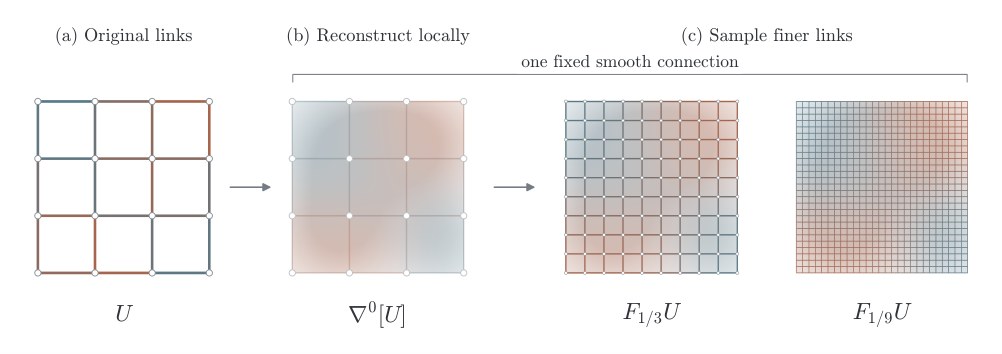
🧲 The physics problem: the Standard Model is a chiral theory, meaning left- and right-handed particles behave differently. Putting such a theory on a four-dimensional lattice, the computational grid used for simulations, is hard without violating gauge invariance. According to AI Weekly, this obstacle has been open for more than 25 years, since Martin Lüscher gave a prescription for simpler theories. Craig's paper constructs, without perturbation theory, a gauge-invariant measure for overlap fermions in a class of nonabelian chiral gauge theories that includes the Standard Model. For admissible gauge fields, comparing chiral projectors at successive lattice spacings yields an exponentially local current and the global properties needed for Lüscher's reconstruction of a smooth, gauge-invariant fermion measure. Craig presents the result as a candidate nonperturbative lattice definition of the Standard Model.
💬 Craig himself describes the role of the AI. In his account, as relayed by AI Weekly, GPT-6 Astra turned his strategy into a construction and took the lead in developing the detailed proof. OpenAI published the text on November 15 as the first guest post on its new science blog. The arXiv page does not mention AI assistance, so the attribution rests on Craig's account and on OpenAI's post. AI Weekly also notes that how authorship is handled and whether OpenAI will release the interaction logs are unresolved.
🔭 Craig frames the result cautiously: it is "far more an answer in principle than an answer in practice." Reflection positivity, a continuous-spacetime definition and realistic lattice simulations remain open, and the result holds only for the admissible gauge fields. Maarten Golterman, Andreas Kronfeld and Yigal Shamir reviewed the work privately. As of AI Weekly's report on November 16, no independent published assessment had appeared. The Lean formalization machine-checks parts of the construction; according to the paper, Lean verification is not the last word in physics. OpenAI's post itself could not be opened for this article; what it says here comes from AI Weekly's report.