📶 AI-designed USB-C LTE modem is built: it texts and makes calls over 4G
In brief
- 📶 Koppar had its AI-designed LTE modem built: it registers on 4G, sends texts and makes calls.
- 🧩 The 4-layer board came from a one-page spec; a review before ordering still found 12 problems.
- 🤖 Per Koppar, five of six frontier models in the RealPCB benchmark could not match its layout.
- 🔓 All files are free as open hardware.
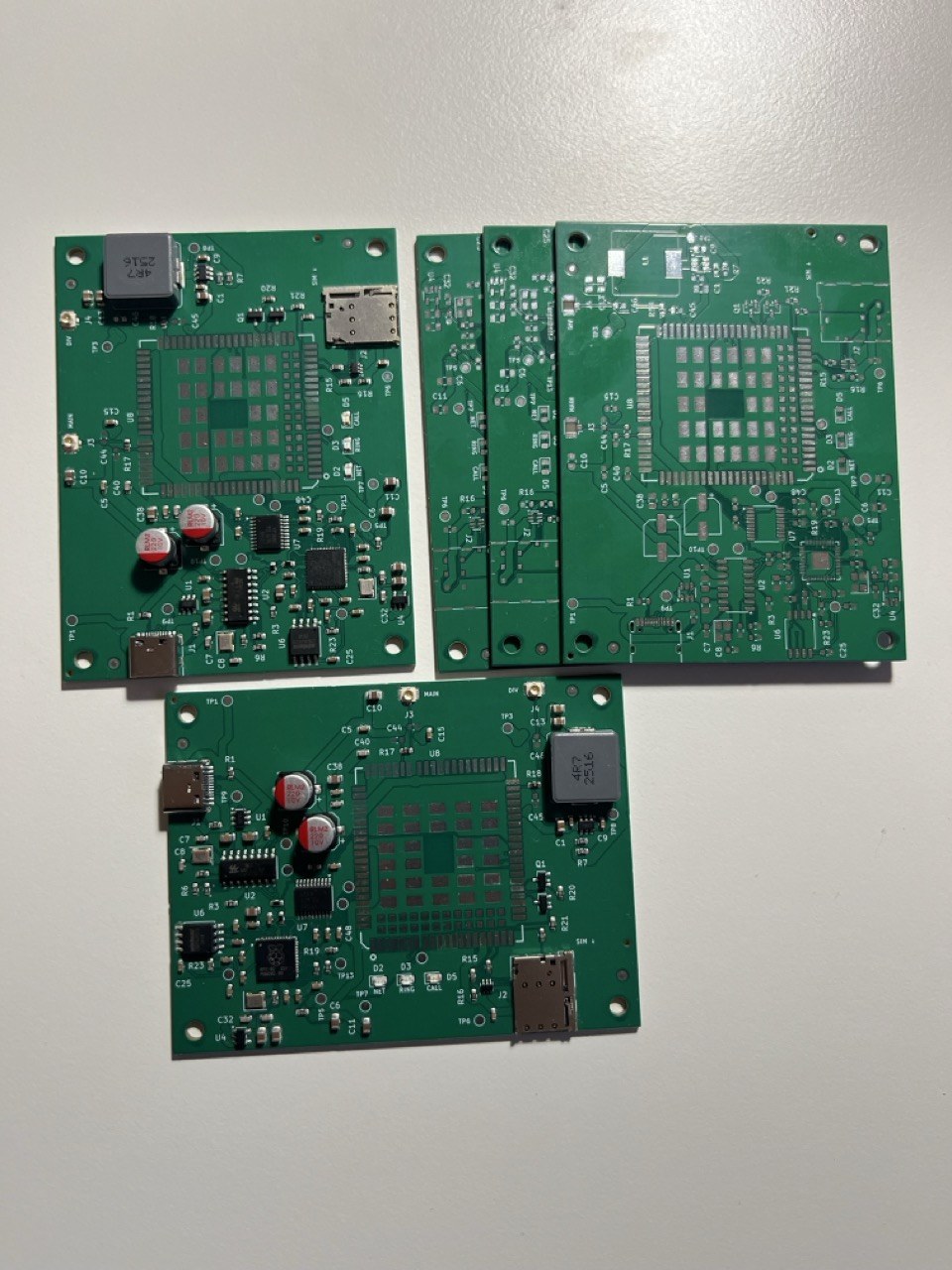
📶 In October the start-up Koppar presented a circuit board its AI had designed from a one-page text spec: an LTE modem that gives a computer its own phone line over a single USB-C cable. At the time it was open whether the board would ever be built and whether it would work. On November 28 Koppar reports: it has been built, and it works. According to the company blog, the second of two assembled boards registers on 4G (bands 3 and 20), sends and receives texts and places and answers calls, with the computer's microphone and speakers carrying the audio. It did not happen without people: a review against the datasheets found 12 problems before ordering that Koppar's own checks had missed, and the copper was redrawn by hand. The layout now serves as a reference in Esuna Labs' RealPCB benchmark, where AI agents lay out real boards. According to Koppar, five of six frontier models could not match the shipped layout. 🔓 Schematic, manufacturing files, firmware and software are on GitHub under an open hardware licence.
🧩 What is on the board. The core is a Quectel EC25-EUX LTE module. An RP2040 microcontroller acts as a USB sound card for the call audio, alongside a USB hub and a 3.8-volt buck converter; the board measures 85 by 65 millimetres. According to the project page, the computer sees three ordinary devices: a network adapter for mobile data, serial ports for commands such as answering calls and sending texts, and a sound card. A computer can thus take a call through a headset, hand it to a script or an AI agent, or send a text. There is no battery, screen or speaker.
🔬 The bring-up in numbers. On November 10 and 11 Koppar first tested the board without the module: the hub enumerated at 480 Mb/s, the crystal read 12,000 kHz, the buck gave 3.90 volts with no load, and the sound card survived 18 open-and-close cycles in a row. With the module and a nano-SIM fitted, by November 22 the EC25 started in about three seconds and appeared on USB some twelve seconds later, reading its own supply at 3.81 volts under load. With VoLTE off, calls fall back to 3G. For daily use Koppar wrote Koppar Phone, a macOS menu-bar app with texts, calls and voicemail.
🛠️ What did not go smoothly. The modules were soldered by hand and both boards needed a second pass. Board 1 starts but does not show up on USB; its USB pins need reflowing. The boards were made from an export taken before recovery pads were added, so the team bridged two pins of the flash chip with tweezers to force the bootloader. A known RP2040 erratum on warm resets behind the hub and a bug in the Pico SDK's USB library, fixed by a newer version, added to the list. For revision C Koppar plans real boot and reset buttons, test pads, a module-on LED and signed firmware updates.
🤖 The comparison with other AI models. Esuna Labs included the board in RealPCB, a benchmark with 20 open example boards. Each agent gets the 115 parts unplaced and unrouted and two hours alone in KiCad. A layout passes only if it is rule-clean and no worse, beyond a margin, than the released original on quality measures such as decoupling loops, the buck's switch node and ground under the signals. Koppar stresses that the models started from parts and connections while Koppar started from a page of text; that framing is the maker's own.
🔓 Build it yourself. The repository holds the KiCad project, Gerber and assembly files for JLCPCB, firmware and host software for macOS and Linux under the CERN-OHL-P-2.0 licence. The LTE module has to be sourced and soldered separately; it must be the European EUX variant, because the North American data-only variants have no voice. The board needs a USB-C port that supplies 3 amps.